Patna: Bihar chief minister Nitish Kumar’s decision to file nomination for the Rajya Sabha on Thursday has triggered one of the most significant political transitions in the state in nearly two decades.

While the move was publicly framed as Nitish’s personal wish to serve in the upper house of parliament, conversations within political circles suggest the decision followed weeks of consultations between leaders of the Bharatiya Janata Party (BJP) and the Janata Dal (United) over the future of governance in the state.
Though Nitish has not yet formally resigned as chief minister, his shift to national politics signals the end of a long era in Bihar’s leadership.

Growing Concerns Over Governance
In recent months, leaders within the ruling alliance had privately expressed concerns about the functioning of the state government.
Senior BJP figures reportedly conveyed to the central leadership that administrative decision-making in Bihar had increasingly shifted towards a group of bureaucrats rather than elected representatives.
Several party leaders argued that ministers and legislators often found themselves sidelined, with officials exercising disproportionate influence over policy implementation and administrative decisions.
These concerns became a key element in discussions about the political future of the state.
Seemanchal Visit And A Key Political Meeting
According to party insiders, a crucial moment came during Union home minister Amit Shah’s visit to Bihar’s Seemanchal region in late February.
On February 25, Shah arrived in Kishanganj, where he held official meetings with senior officers from the Sashastra Seema Bal (SSB), intelligence agencies and other security institutions to review border management and regional security issues.
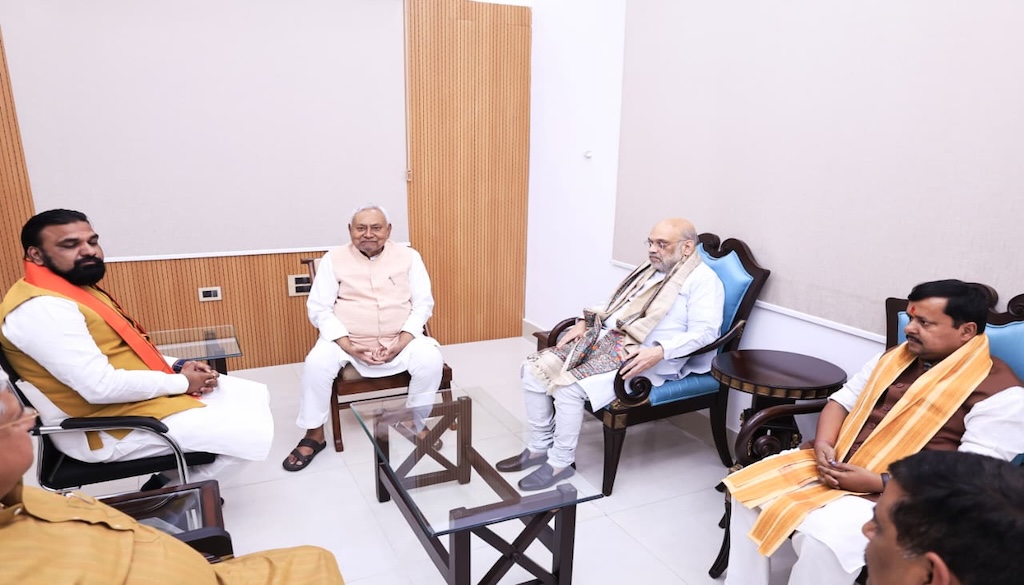
Later that evening, however, a closed-door political meeting reportedly took place at the residence of senior BJP leader and minister Dilip Jaiswal.
The gathering included Deputy Chief Minister Samrat Choudhary, BJP state president Sanjay Saraogi, Union minister Nityanand Rai and several senior state leaders.
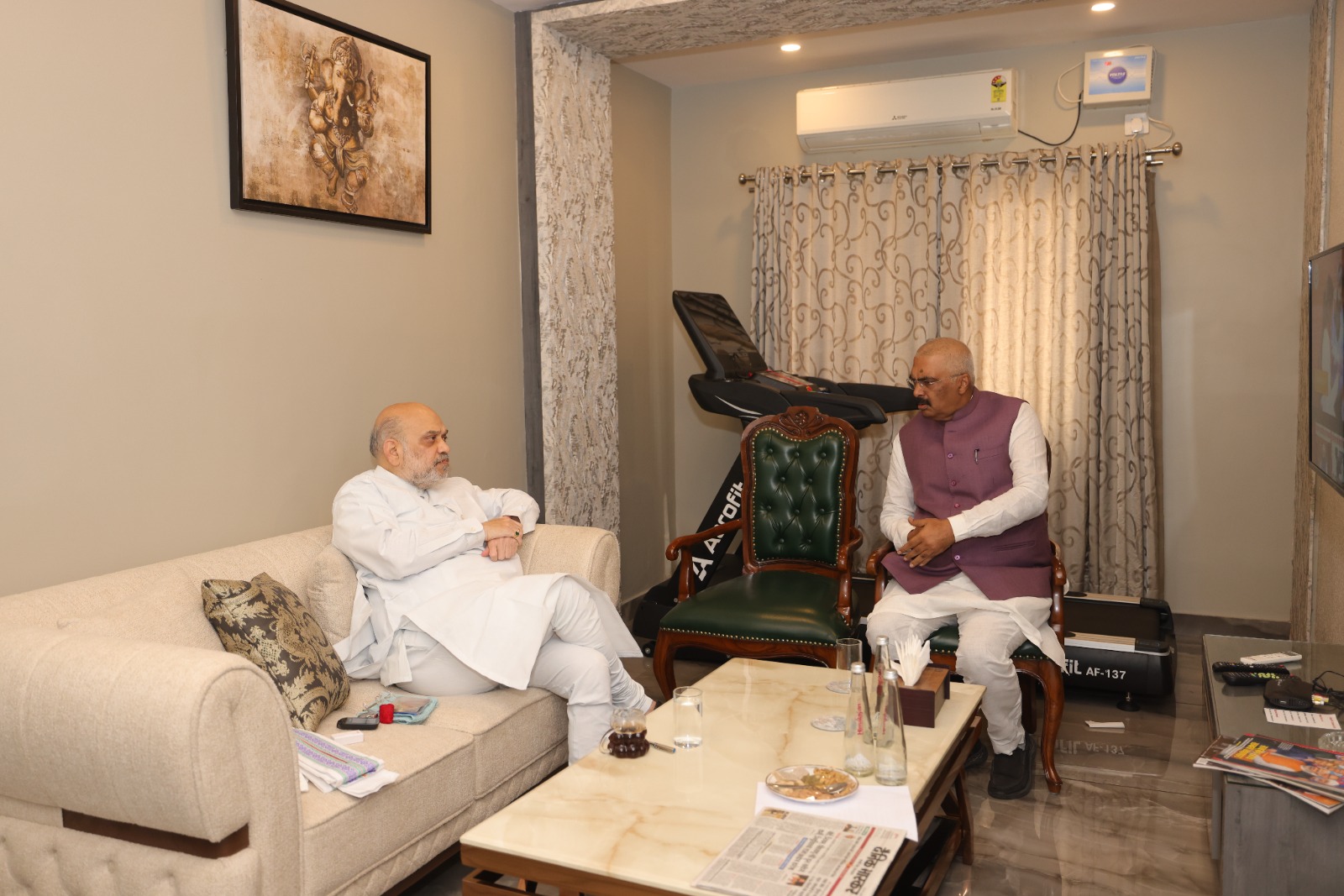
According to people familiar with the discussion, the meeting focused largely on the political situation in Bihar and concerns about governance within the state government.
Several leaders reportedly told Shah that the administration was being run largely by officials rather than elected leaders.
You may like to read this article as well:
How Nitish Kumar Built Bihar’s Powerful Bureaucracy — And What Happens After Him
Consultations With JD(U) Leadership
Following the Seemanchal discussions, consultations reportedly moved to Delhi.
Over the following week, Shah is believed to have held multiple meetings with JD(U) leaders including the party’s working president Sanjay Jha and Union minister Rajiv Ranjan Singh, widely known as Lalan Singh.
Sources say these discussions focused on the future leadership structure in Bihar and the possibility of Nitish transitioning to the Rajya Sabha.
Jha is said to have travelled frequently between Delhi and Patna during this period, briefing Kumar after each round of talks.
Internal Resistance And Family Concerns
Within the JD(U), the proposal initially triggered uncertainty.
Some leaders worried about the political implications of Nitish leaving the chief minister’s office, while family members were reportedly reluctant about the move.
For a brief period, the plan appeared to stall.
As the Rajya Sabha nomination deadline approached, discussions intensified at the chief minister’s residence in Patna.
According to party insiders, Nitish eventually agreed to proceed with the plan, citing his commitment to the alliance.
You may like to read this article as well:
Announcement And Political Reaction
On the morning of March 5, Nitish confirmed the decision through a post on social media, stating that he had long wished to become a member of both houses of parliament during his political career.
The announcement immediately triggered political reactions across the state.
Leader of opposition Tejashwi Prasad Yadav claimed the move reflected political pressure from the BJP, arguing that the ruling party had effectively taken control of the alliance.
The End Of A Political Era
Nitish Kumar has remained the dominant political figure in Bihar for nearly two decades, navigating multiple alliances while maintaining his position as chief minister.
His move to the Rajya Sabha marks not only a personal political shift but also a broader transformation within the National Democratic Alliance in Bihar.
With Nitish stepping back from day-to-day governance, the balance of power within the alliance is widely expected to tilt further towards the BJP — potentially reshaping the state’s political landscape for years to come.