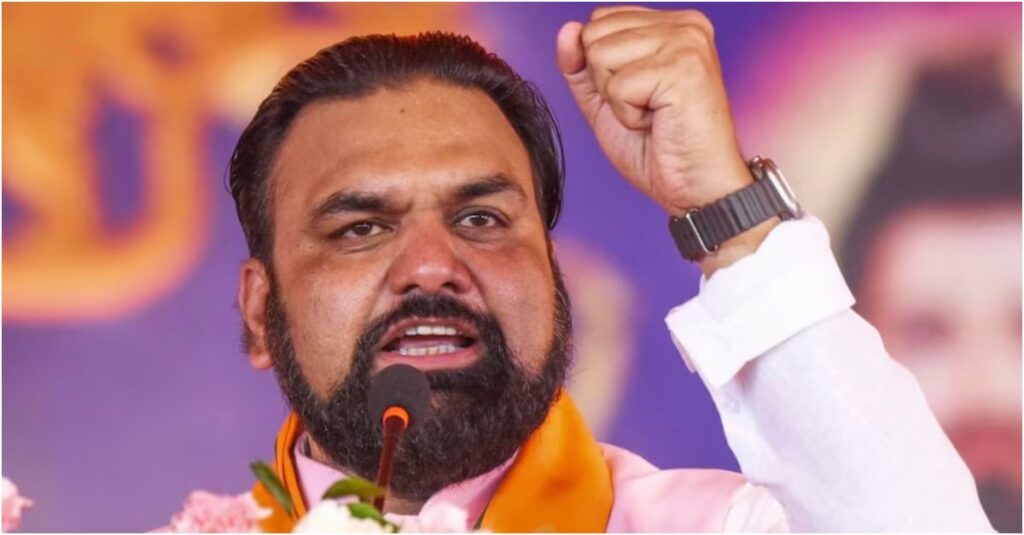
Patna: Bihar is facing mounting economic and governance challenges as Chief Minister Samrat Choudhary takes on a larger leadership role amid rising fiscal pressure and expectations to deliver on electoral promises.

Significant public expenditure on poll commitments has already strained the state exchequer, leaving limited resources for new schemes. Mobilising additional funds for development initiatives remains a key challenge for the government.
Under the NDA’s ‘Saat Nischay’ programme, the state has set an ambitious target of doubling per capita income by 2030. However, experts point out that achieving this goal will be difficult without substantial growth in employment opportunities and industrial development.

Fiscal stress has emerged as a major concern. Bihar’s fiscal deficit has breached the 3 percent threshold and is estimated to reach 11.8 percent in 2025–26. The state’s total liabilities have climbed to nearly 39 percent of its Gross State Domestic Product (GSDP), reflecting increasing financial strain.
Despite a total budget size of Rs 3.47 lakh crore, over 65 percent is being spent on revenue expenditure, leaving limited room for capital investment. Economists stress that increasing capital expenditure is essential for long-term growth, but current fiscal constraints make it a difficult task.
Bihar’s economy continues to be largely agriculture-driven, with limited industrial expansion. While the overall unemployment rate stands at 3.9 percent, joblessness among youth remains significantly higher, contributing to large-scale migration from the state.
The state also lags behind in per capita income. In 2023–24, Bihar’s per capita income stood at Rs 32,227, considerably lower than the national average. Analysts attribute this gap to high population growth and a relatively weak economic base.
Land-related disputes remain a major administrative hurdle, accounting for nearly 70 percent of all cases. Digitisation of land records and removal of encroachments have emerged as priority areas for the government.
On the law and order front, while incidents of Left-wing extremism have declined, concerns over crime and corruption persist. Rising cases of crimes against women have also provided ammunition to the opposition to target the government.
The administration has signalled a tough stance on corruption and indicated plans for governance reforms. However, observers note that the real test will lie in effective implementation of these policies on the ground.
Political stability is another crucial factor. Managing alliance dynamics will be key to ensuring smooth governance, particularly in a state known for shifting political equations.
As Bihar navigates these multiple challenges, all eyes are now on how quickly the leadership can deliver tangible results. Citizens continue to expect improved law and order, economic growth, and a better quality of life.