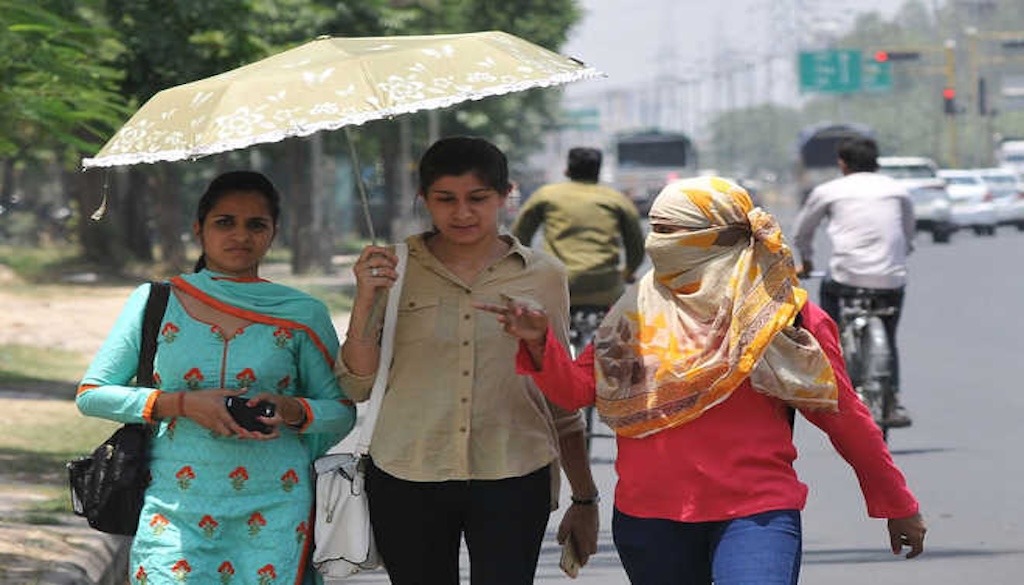
Patna: Bihar is witnessing sharply contrasting weather conditions, with intense heat affecting southern and southwestern districts while the Seemanchal region faces the likelihood of rain and lightning.

The India Meteorological Department has issued an alert for April 18 for districts including Araria, Kishanganj, Purnia and Katihar, warning of rainfall accompanied by lightning.
Heat Intensifies In South Bihar

Temperatures have already crossed the 40°C mark in several parts of the state, with Dehri recording the highest at 41.6°C. Other districts such as Aurangabad, Buxar and Gaya are also experiencing severe heat due to the influence of hot, dry westerly winds.
In contrast, Patna recorded a maximum temperature of 34°C — a sharp drop from 38.9°C the previous day — offering temporary relief.
Weather Systems Driving Contrast
Meteorologists attribute the changing conditions to a combination of weather systems. A cyclonic circulation over northeastern Madhya Pradesh and a trough line extending from Rajasthan to Manipur are drawing moisture into northeastern Bihar.
This has led to cloud formation and favourable conditions for rainfall in Seemanchal.
At the same time, a strong westerly jet stream over northwestern India is pushing hot, dry winds into southern Bihar, causing temperatures to rise rapidly in those regions.
Outlook For Coming Days
— Mausam Bihar- IMD Patna (@imd_patna) April 17, 2026
Weather officials said Patna and parts of central Bihar may see slightly below-normal temperatures over the next couple of days due to intermittent cloud cover, though humidity is expected to keep conditions uncomfortable.
However, from April 19 onwards, temperatures are likely to rise again across central Bihar, with a further increase in heat intensity expected after April 20.
Authorities have warned of possible heatwave conditions, particularly in southern and western districts, where daytime temperatures could reach between 40°C and 42°C.
If the trend continues, officials said, the final week of April could bring heightened heat stress across large parts of the state.