
Patna: Arthshila Patna hosted a cultural programme titled “Mukesh Ko Yaad Karte Huye” on June 20, bringing together music enthusiasts, students and researchers to revisit the life and legacy of legendary playback singer Mukesh.

The event was organised alongside the ongoing exhibition “Cinemchi Duniya: Panna, Parda, Baja”, which explores cinema through print culture, posters, radio, magazines and digital media.
Presentation on Mukesh’s Musical Journey

The session was led by writer, cinema scholar and former Indian Administrative Service officer Pankaj Rag, who offered a detailed overview of Mukesh’s contribution to Indian film music.
Rag described Mukesh as a voice that reflected the emotional depth of ordinary listeners, highlighting themes of love, longing and human vulnerability that shaped his songs.
Curated Retrospective Through Music
A key feature of the programme was a chronological presentation of Mukesh’s career, spanning the 1940s to the 1970s.
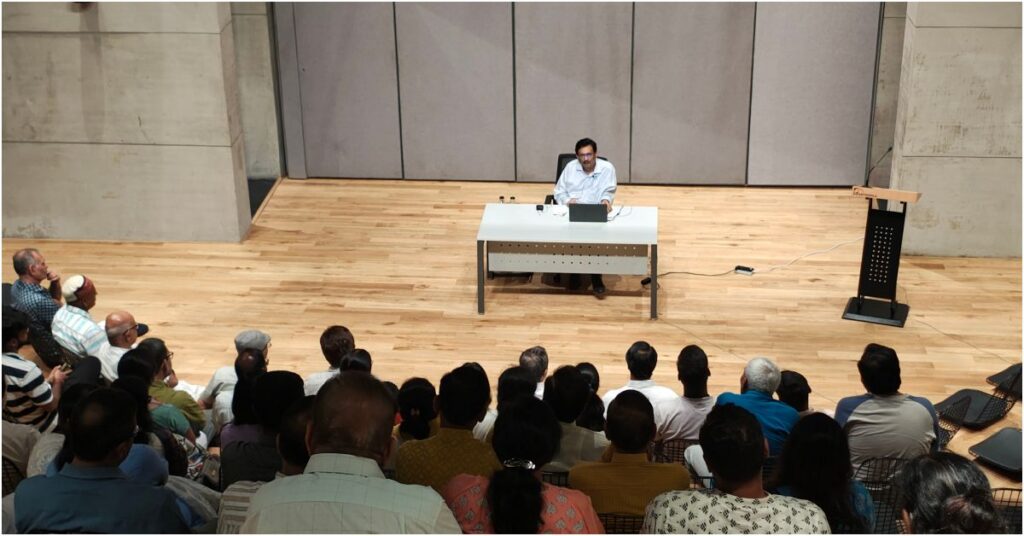
Through more than thirty curated tracks and rare audio excerpts, Rag traced the singer’s artistic evolution, featuring songs from films including Pehli Nazar (1945), Andaz (1949), Awara (1951), Yahudi (1958), Madhumati (1958), Phir Subah Hogi (1958), Sangam (1964), Saraswatichandra (1968), Purab Aur Paschim (1970), Mera Naam Joker (1970) and Rajnigandha (1974).
The presentation also included lesser-known and unreleased recordings, offering audiences insight into Mukesh’s stylistic range and development over three decades.
Cinema, Memory and Cultural Context
Rag also discussed Mukesh’s collaborations with composers, lyricists and filmmakers, situating his work within the broader social and cultural history of Indian cinema.
The session prompted audience interaction on themes of nostalgia, collective memory and the continuing relevance of film music in contemporary culture.
Part of Wider Exhibition Programming
The programme formed part of a broader series of public events linked to “Cinemchi Duniya: Panna, Parda, Baja”.
Earlier, Arthshila Patna organised a screening of Barsaat Ki Raat followed by a discussion with media historian Ravikant and a curator-led walkthrough of the exhibition.
Organisers said the series aims to encourage audiences to view cinema as an evolving cultural archive rather than only a form of entertainment.
The response to the programme highlighted sustained public interest in Mukesh’s music and reinforced the role of cultural institutions in preserving and revisiting cinematic heritage.