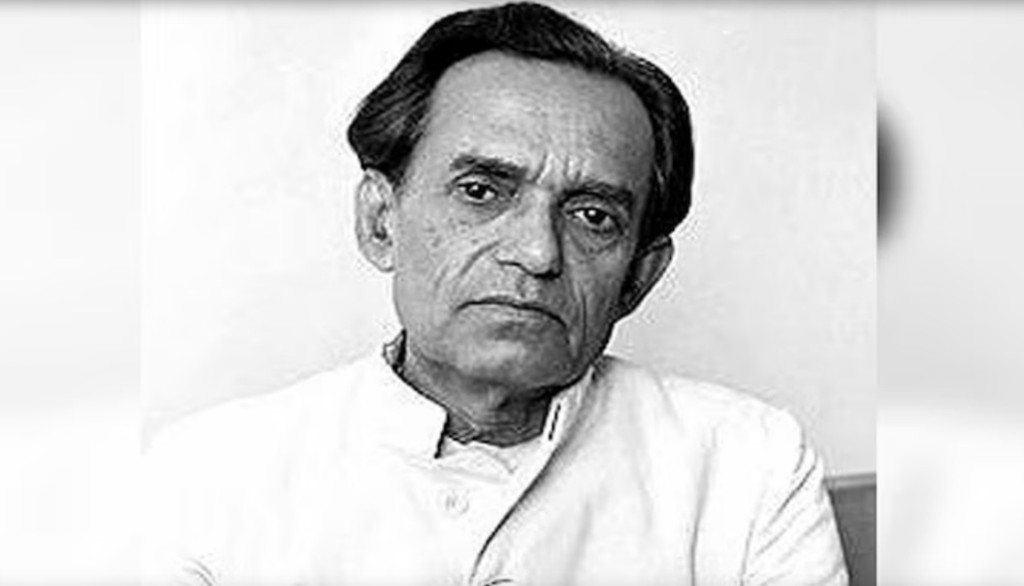
Patna: As political debates resurface over minority leadership in Bihar, the story of Abdul Ghafoor — the state’s only Muslim Chief Minister — offers both a lesson in integrity and a reflection of how little has changed in the decades since.

When conversations about Muslim figures in Bihar politics arise, names like the BJP’s Shahnawaz Hussain and RJD’s Abdul Bari Siddiqui often dominate. Yet, none of them have ever reached the state’s top post. The renewed chatter around Mukesh Sahni’s potential appointment has rekindled a familiar question: are Muslim leaders in Bihar limited to vote-bank symbolism rather than positions of real power?
A Quiet Arrival, a Tumultuous Beginning

Abdul Ghafoor took office on 2 July 1973, appointed by then Prime Minister Indira Gandhi. His arrival in Patna was modest — there was no official welcome, no garlands, no crowds. He stepped off the plane, carrying newspapers in his hand, as supporters of former CM Daroga Prasad Rai, including a young Lalu Prasad Yadav, shouted slogans nearby. The JP Movement’s flames were already rising, and Ghafoor had walked straight into political chaos.
Simplicity and Sincerity: ‘Chacha Ghafoor’
Ghafoor was known not for pomp, but for presence. At his residence on 5 KG Avenue, his doors remained open to the public. Each evening, he drove his own white Fiat to a paan shop on Bailey Road, often stopping to enjoy toddy in an earthen pot, which earned him the affectionate nickname Chacha Ghafoor. His down-to-earth demeanor and accessibility made him a beloved figure among common citizens.
Standing Firm During the JP Movement
Ghafoor’s tenure was marked by the JP Movement, a period that tested his leadership like none other. On 18 March 1974, when student protesters surrounded the Assembly, he made the tough call — curfew, lathi charge, and police firing. Eight people died that day. In the Assembly, he stood firm: “The government has a long hand; no one can escape the law.” It was a controversial yet defining moment that reflected his decisiveness amid chaos.
Wit Sharper Than Politics
Known for his sharp humour and unfiltered candour, Ghafoor left many with unforgettable one-liners. After Railway Minister Lalit Narayan Mishra’s assassination, when journalists demanded the use of the state plane, he famously said: “If you’re in such a hurry, just sit in these pyjamas and fly!” During a railway strike, when asked to provide transport, his curt reply — “Is it the CM’s job to arrange trucks? I’ve sent it to the Transport Commissioner” — became legendary.
Exit from Power, Entry into Legacy
In April 1975, Congress factionalism led to his removal after complaints reached Indira Gandhi. Yet Ghafoor remained undeterred. He served as a Union Minister, later joined Nitish Kumar’s Samata Party, and continued to win hearts and elections alike. Until his death in 2004, he was often spotted sipping tea at Fraser Road, chatting with locals — still the same “Chacha” who once ruled Bihar.
The Unanswered Question
Abdul Ghafoor’s life poses an uncomfortable question: why has Bihar — and by extension, India — struggled to empower Muslim leaders beyond symbolism? Decades later, with names like Shahnawaz Hussain and Abdul Bari Siddiqui still waiting for a turn at the top, Ghafoor’s story remains hauntingly relevant.