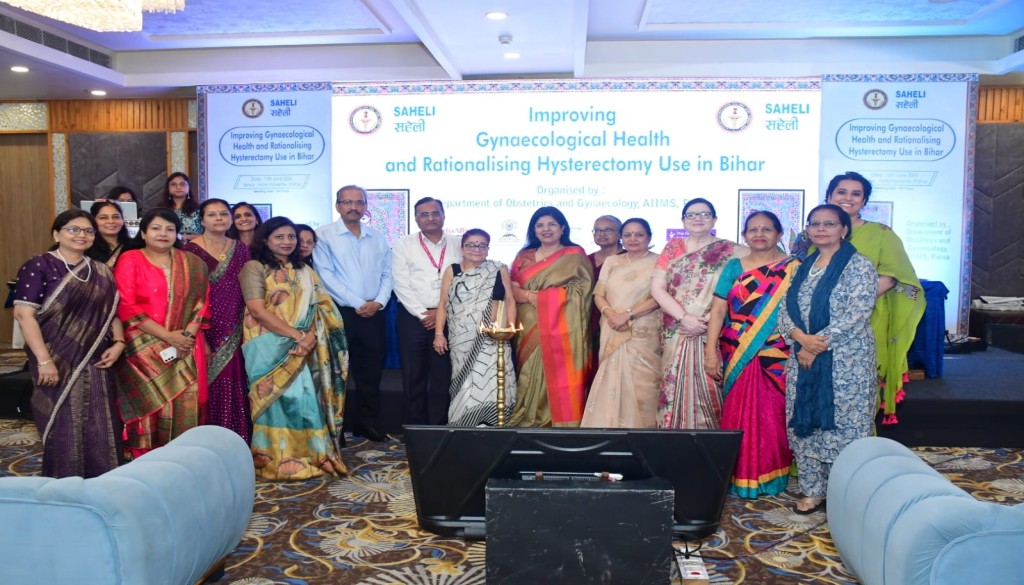
Patna: All India Institute of Medical Sciences (AIIMS) Patna on Friday hosted a high-level meeting on improving gynaecological health and rationalising hysterectomy use in Bihar, bringing together doctors, public health experts and policymakers.

The meeting was organised under the SAHELI study consortium, supported by the DBT-Wellcome India Alliance, and focused on reducing unnecessary hysterectomies and strengthening women’s healthcare services in the state.
Addressing the gathering, Dr Raju Aggarwal, executive director of AIIMS Patna, highlighted the need to prevent avoidable hysterectomies and improve access to quality care for women.

Experts stress alternatives to surgery
Among the guests of honour were Dr Neerja Bhatla, Padma Shri awardee and former head of department at AIIMS Delhi, and Dr Ashok Kumar, director of Ram Manohar Lohia Hospital, Delhi.
Both emphasised the importance of expanding access to alternative treatments for common gynaecological conditions, particularly at the primary healthcare level.
They said conservative treatment options should be made more widely available so that surgery remains a last resort.
SAHELI study presents new findings from Bihar
The meeting also presented new findings from the SAHELI study, conducted in collaboration with the International Institute for Population Sciences (IIPS), Mumbai, the Population Council Institute, AIIMS Delhi and The George Institute (TGI).
The study examined hysterectomy trends in Bihar through a statewide survey, medical audits and analysis of medical textbooks.
Officials said the findings are expected to inform future healthcare policy and clinical practices in the state.
Bihar forms monitoring panel for hysterectomies
During the discussions, Dr Sarita, state programme officer from the State Health Society (SHS), said Bihar has recently set up a State Monitoring Committee to track hysterectomies carried out in both private and public healthcare institutions.
The move is aimed at strengthening oversight and ensuring appropriate clinical decisions.
Focus on long-term women’s health
Dr Mukta Agarwal, head of department at AIIMS Patna and co-principal investigator of the SAHELI study, said Bihar is at a crucial stage in improving gynaecological care.
She said women must have access to high-quality treatment options for common issues such as heavy menstrual bleeding, reducing the need for hysterectomy unless medically necessary.
Dr Bhatla cautioned that hysterectomy at a young age without clear medical indication can have long-term health consequences and stressed the need for life-course-based gynaecological care.
Statewide participation by gynaecologists
The meeting saw participation from leading gynaecologists across Bihar, with panel discussions focusing on medical audits, access to hormone replacement therapy and alternative treatment pathways.
Officials said the consultation was part of broader efforts to strengthen evidence-based women’s healthcare in the state.