
Patna: From April 1, residents and institutions across Bihar’s municipal bodies will be required to follow a sweeping overhaul of waste management rules that makes strict segregation mandatory, places full disposal responsibility on large generators, and empowers sanitation workers to refuse unsegregated waste.

The new framework applies across cities including Patna and is part of what officials describe as an effort to modernise urban sanitation, reduce landfill dependence, and increase recycling and energy recovery from municipal waste.
Under the revised rules, any institution generating more than 100kg of waste per day—or occupying more than 20,000 square metres of built-up area—will be classified as a “bulk waste generator”. This category includes apartment complexes, hotels, government buildings and large institutions.

These entities will now be required to manage and process their waste on-site. Wet waste must be treated through composting within premises, while dry and other waste streams must be handled using dedicated infrastructure developed and maintained by the generators themselves. Authorities say compliance will be monitored through an online tracking system developed by the Central Pollution Control Board.
Officials argue the shift is intended to decentralise waste processing and reduce pressure on municipal collection systems, which have long struggled with capacity constraints in rapidly growing urban areas.
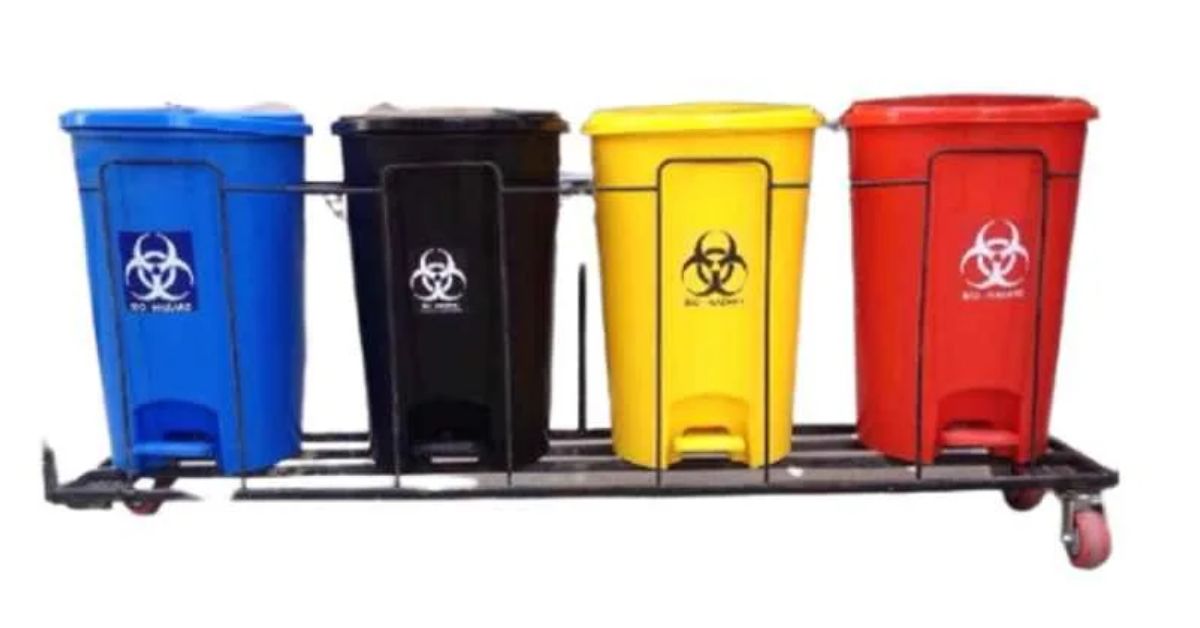
For ordinary households as well, the rules introduce stricter segregation norms. Where earlier waste was commonly divided into two streams—wet and dry—residents will now be required to separate waste into four categories, each linked to a colour-coded bin system.
Green bins will be used for wet waste such as kitchen scraps, fruit and vegetable peels, and other biodegradable material. Blue bins will be designated for dry recyclable waste including plastics, paper and metals. Red bins will be reserved for sanitary waste such as diapers and sanitary napkins. Black bins will be used for hazardous and special waste including e-waste, bulbs, expired medicines and certain chemical products.
Municipal workers will be authorised to refuse collection of waste that is not properly segregated at source, effectively making household compliance central to the functioning of the new system. Officials say the aim is to ensure waste is sorted before it enters the collection chain, rather than at processing facilities.
In Patna, the municipal corporation is also preparing to expand its waste collection capacity. Plans are underway to procure 225 new vehicles, including 150 closed tippers and 75 open tippers, to service 375 sectors across six administrative zones. The move is intended to strengthen door-to-door collection and improve segregation compliance at the neighbourhood level.
Beyond collection and segregation, the policy places strong emphasis on resource recovery. Dry waste is expected to be processed into refuse-derived fuel (RDF), which can be used in industrial applications such as cement manufacturing. Officials say the long-term target is to substitute around 15% of coal consumption with RDF within the next six years, as part of a broader push towards alternative fuels.
Wet waste, meanwhile, is to be converted into compost for agricultural use, with the goal of reducing the volume of waste sent to landfills. Authorities say only non-recyclable and non-recoverable waste will ultimately be allowed to reach dumping sites under the new system.
Refuse-derived fuel is produced by processing non-recyclable waste into a combustible material that can be used as an energy source, particularly in industrial boilers and kilns. Officials argue this approach not only reduces landfill burden but also creates value from waste that would otherwise be discarded.
The policy is being framed by officials as part of a wider attempt to improve urban cleanliness standards, reduce environmental pollution, and bring Bihar’s waste management systems in line with national sustainability goals. However, its success is expected to depend heavily on enforcement, infrastructure readiness, and public compliance with the new segregation requirements.