Patna: In small towns across Bihar, the Gulf is often spoken of in the language of hope. A job abroad can mean a new roof, cleared debts, a daughter’s education secured. But for three families in Siwan, Gopalganj and Bettiah, those hopes have curdled into anxiety and grief.

For more than a year, Deepak Kumar Singh from Siwan, Ritesh Thakur from Gopalganj and Ravi Kumar from Bettiah have been imprisoned in jails in the United Arab Emirates. Back home, their families say they are caught between mounting debts and the slow grind of legal processes in a foreign land.
“He promised to build us a house”

In Hajiapur ward No 8 of Gopalganj, Punita Devi keeps her husband’s photographs close. Ritesh Thakur, who worked in a salon in India, left for Dubai in 2023 on a tourist visa. The plan was simple: earn more, pay off loans, build a proper house for his wife and two young daughters.
“For a year he sent money home,” Punita says. “Then one day his phone went off. We stopped hearing from him.”
Months later, a call from an unfamiliar number brought the news she had feared: Ritesh was in Fazira jail in Dubai. According to the family, he had overstayed his visa after allegedly falling into the hands of brokers who promised better work.
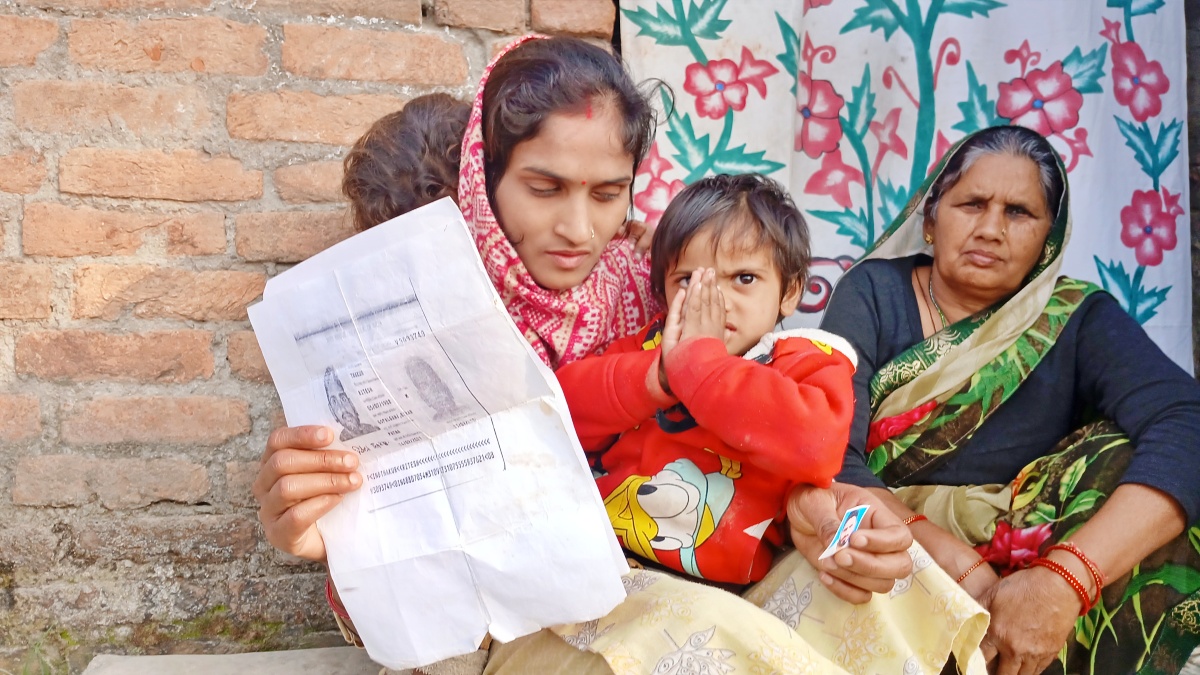
Now, Punita and Ritesh’s elderly mother, Kamala Devi, say they are struggling to survive. “He is the only earning member,” Punita says. “My daughters keep asking why their papa is not coming home.”
The family has petitioned the district magistrate and appealed to both Prime Minister Narendra Modi and chief minister Nitish Kumar for help, but say they have little clarity on the legal status of the case.
“We sent him with borrowed money”
In Bettiah’s Santghat locality, Ravi Kumar’s parents tell a similar story of risk and regret. Ravi was sent to Dubai in May 2024 after his father, Kanhaiya Kumar, who runs a handcart, took loans and mortgaged jewellery to pay an agent.
The promised salary of Rs 35,000 a month, his mother Shakuntala Devi says, never materialised. Instead, he was paid roughly half that amount. When Ravi protested, she alleges, he was dismissed and left stranded.
“He called us saying his phone and money were taken,” Shakuntala says, her voice breaking. “He went to the police, but then he was arrested.”

The family claims Ravi is now lodged in a jail in the UAE. Kanhaiya Kumar says he even borrowed an additional Rs 40,000 to help his son search for another job, only for matters to worsen. “If we had money, why would we send him abroad?” he asks.
The family has approached local politicians and met representatives linked to Jan Suraaj, the political platform founded by Prashant Kishore, who has reportedly assured assistance in taking up the matter with the Ministry of External Affairs and the Indian embassy.
A fine beyond imagination
In Siwan’s Katwar village, Deepak Kumar Singh’s arrest has left his family stunned. Deepak, who worked for a private company in Abu Dhabi, returned home briefly in April for his sister’s wedding before flying back to the UAE in June.
Six days later, his family says they received a call informing them that he had been arrested on charges of carrying contraband. According to information relayed through official channels, he has been fined 5 lakh dirhams — roughly Rs 1.25 crore.

“We cannot imagine such money,” says his grandfather. “If he had that kind of wealth, why would he go abroad to work?”
The family questions how he could have travelled through Indian airports if he was carrying prohibited items, and says they have approached officials in Bihar, Uttar Pradesh and New Delhi without receiving substantive relief.
A legal maze
Under India’s Repatriation of Prisoners Act, 2003, prisoners can apply for transfer to serve their sentence in India. Applications must be made through the Indian consulate or embassy, accompanied by documents such as passport copies, court judgments and fingerprints. Requests are reviewed by the ministries of home affairs and external affairs in coordination with the foreign government.
But for families in rural Bihar, navigating this process is daunting. Many lack detailed information about the charges, the status of cases or the cost of legal representation abroad.
Migration to the Gulf has long been a lifeline for thousands of families in Bihar. Remittances fund homes, education and medical care. Yet these three cases underline the precariousness of that journey — where visa overstays, disputes with employers or alleged criminal charges can quickly spiral into detention.
In homes across Siwan, Gopalganj and Bettiah, parents and children wait for phone calls that may or may not come. The Gulf still glimmers as a land of opportunity — but for these families, it has become a place of unanswered questions and prolonged separation.