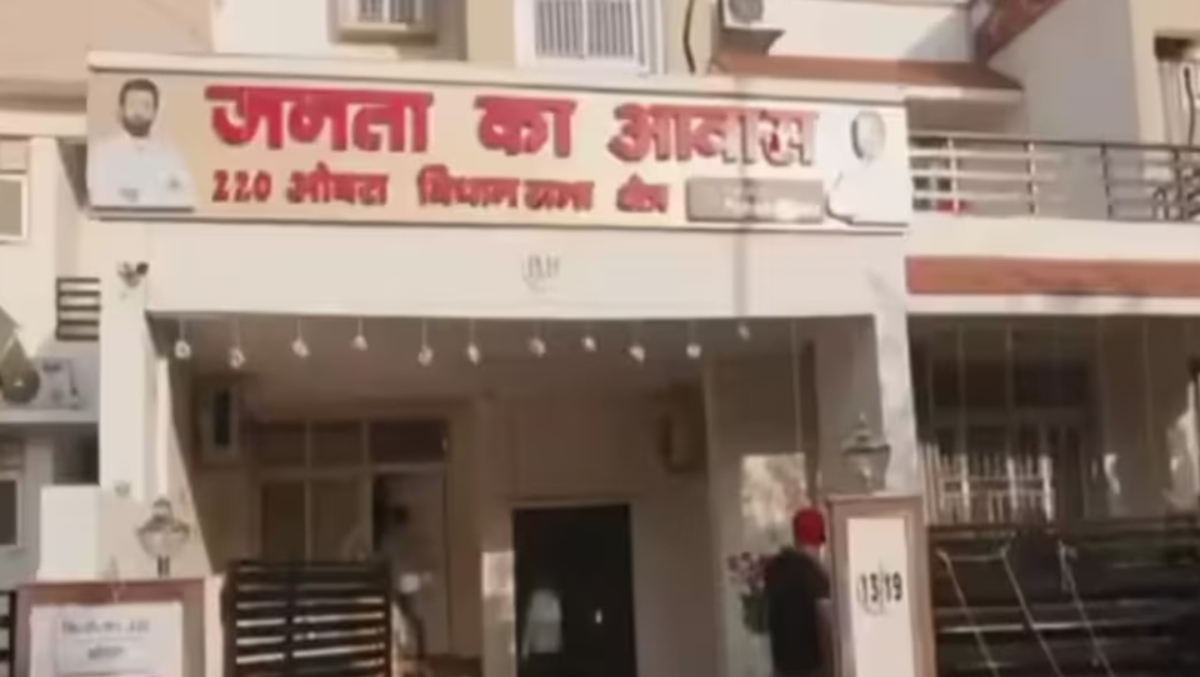
Patna: A first-time MLA from Bihar has opened the doors of his official residence in the state capital to members of the public, promising free accommodation and meals for people from his constituency who travel to Patna for essential work.

Dr Prakash Chandra, the MLA from Obra and a member of the Lok Janshakti Party (Ram Vilas), said his newly allotted government bungalow would be formally inaugurated as a public facility on 2 March. He described the decision as the fulfilment of a campaign pledge made during the assembly elections.
Chandra said many residents from rural areas of Obra travel to Patna for examinations, medical treatment and administrative work but struggle to find affordable accommodation. “During the election campaign, I promised that no one from my constituency would have to suffer for lack of a place to stay in the capital,” he said. “This residence now belongs to the people.”

Under the arrangement, visitors from the constituency will be able to stay at the property free of charge, with meals also provided. The initiative is intended to reduce the financial strain on families who often spend a significant portion of their savings on short stays in the city.
The move has sparked discussion in political circles, where official residences are typically reserved for personal use by legislators and their families. By converting his government accommodation into what he calls a “public service centre”, Chandra has taken an unusual step in state politics, positioning himself as a grassroots-focused representative.
Chandra began his political career in 2004 as a Panchayat Samiti member in the Tarari region. Although he had the opportunity to assume the post of block chief, he declined and remained active in social work. After losing the 2020 assembly election, he continued working in the constituency before securing victory from Obra in 2025, defeating Rashtriya Janata Dal candidate Rishi Kumar in a closely fought contest.
With the inauguration approaching, the initiative is likely to be closely watched both by constituents who stand to benefit directly and by political observers assessing whether the move signals a broader shift in how elected representatives use public resources.