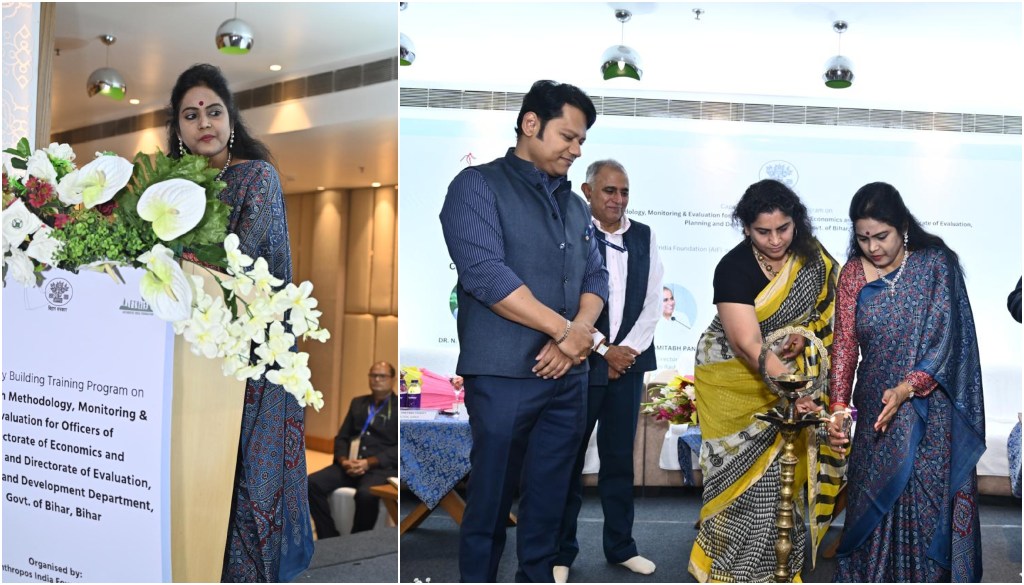
Patna: The Planning and Development Department of Bihar inaugurated a two-day training programme today aimed at enhancing the state’s research, monitoring, and evaluation capabilities. The programme, running on February 13 and 14 in collaboration with the Anthropos India Foundation, was formally opened by Additional Chief Secretary Dr N. Vijayalakshmi.

Addressing participants, Dr Vijayalakshmi emphasised the importance of scientific research methods for effective implementation, continuous monitoring, and objective evaluation of the state government’s welfare and development schemes. She said evidence-based policymaking was central to administrative efficiency, adding that the goal of research was not merely data collection but understanding social behaviour, local needs, and community participation to make schemes more impactful.
Reflecting on her personal journey, Dr Vijayalakshmi shared that her longstanding interest in anthropology had shaped her approach to governance. “If I had not been in the civil service, I would be here today as an anthropologist,” she said, underlining the value of a deep understanding of society and culture in planning successful development initiatives.

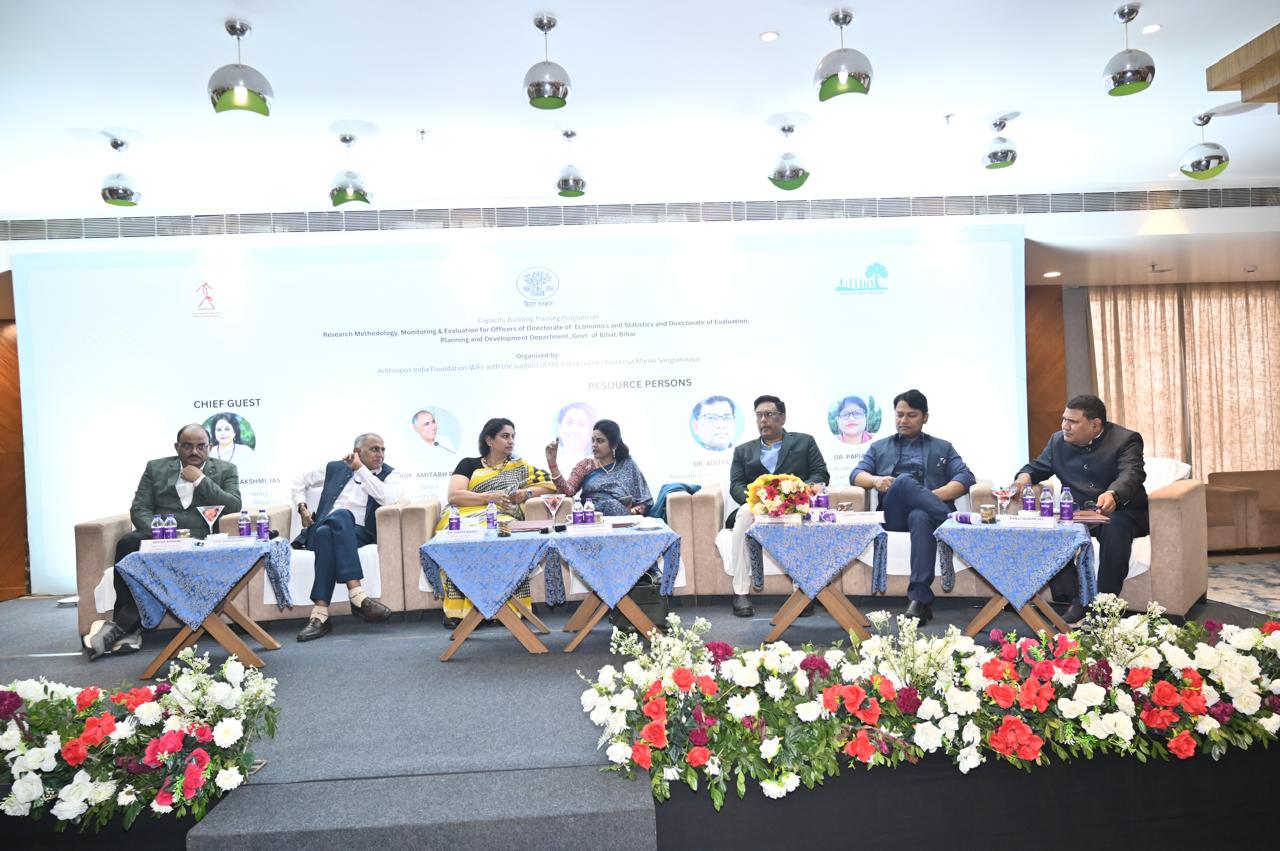
The programme, which began at 9:30am, was attended by senior officials including Mayank Varvade, Principal Secretary of the department, Kanwal Tanuj, Secretary, Ranjit Kumar, Director of the Directorate of Economics and Statistics, and Ravish Kishore, Joint Secretary, alongside district-level and departmental officers.
Participants received instruction on both basic and advanced research techniques, including sampling, survey design, statistical analysis, and impact evaluation. Sessions incorporated case studies, group discussions, and practical exercises designed to strengthen analytical skills, report-writing, and data interpretation for timely project reviews.
Officials were also encouraged to adopt technology-driven monitoring and evaluation methods to improve efficiency from the state to district level. The department described the training as part of an ongoing effort to make development planning more transparent, accountable, and results-oriented, with similar capacity-building programmes planned for the future.