
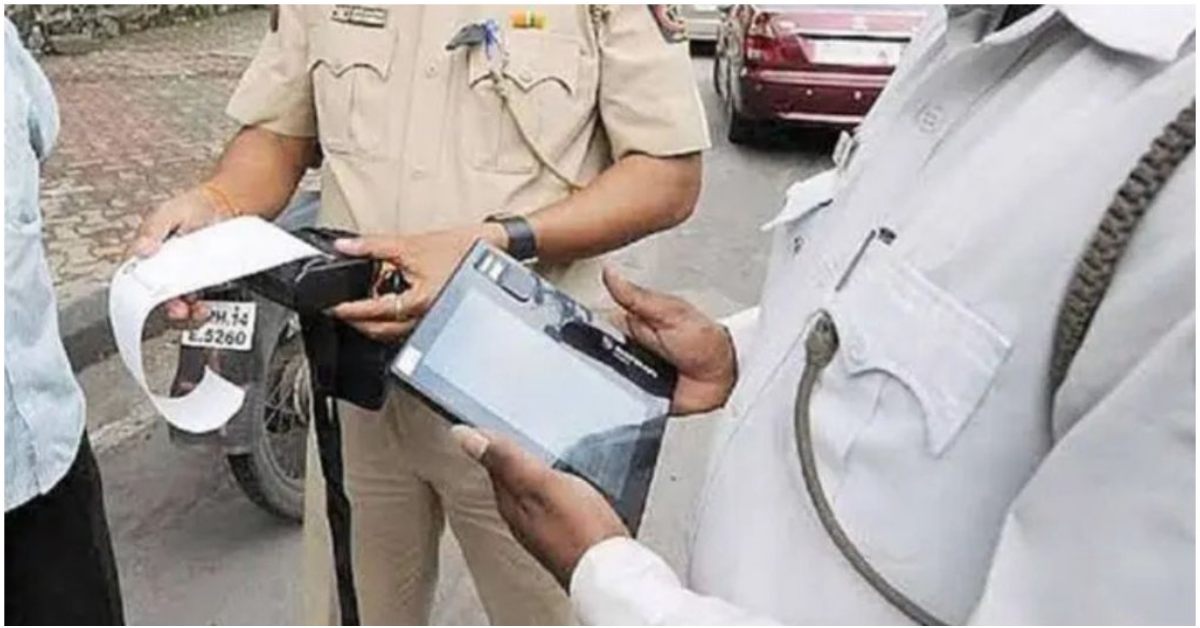
Patna: The Bihar Transport Department has introduced a significant revision to the way traffic challans are issued, limiting penalties to one per vehicle per day for the same offence. Officials say the move is intended to reduce instances of drivers receiving multiple fines for identical violations, a practice that had prompted widespread complaints.

Under the new rules, once a vehicle has been challaned for a particular breach, it will not be penalised again on the same day for the same infraction. The system used by the Patna District Transport Office and traffic authorities has been updated so that handheld challan machines and mobile applications immediately flag whether a vehicle has already been fined that day.
The change follows months of grievances from motorists who reported being issued four or five challans within a single day. In many cases, the same alleged violation was recorded multiple times by cameras at different locations, leading to cumulative penalties. Officials acknowledged that large numbers of drivers had visited the transport office to contest the fines, prompting a review of procedures.

Transport department data indicates that an average of 50–60 challans are issued daily in urban Patna, with 10–12 instances involving multiple penalties for the same vehicle on the same day. Some motorists reported fines running into thousands of rupees. The updated system will now display details of any previous challan issued for the same registration number, including location and reason, preventing a second penalty.
The double-challan problem has been particularly acute in cases relying on automated photo evidence and mobile enforcement. Drivers complained that fines were sometimes issued even when vehicles were parked at home, or when administrative errors matched a bike’s registration number with a car. The revised software is designed to block repeat challans once a penalty has been logged.
Transport officials say the policy aims to restore confidence in the enforcement system and eliminate unnecessary financial burdens on motorists. Critics of the previous arrangements had argued that repeated penalties undermined public trust and risked turning traffic enforcement into a revenue-raising exercise rather than a road-safety measure.
While the department believes the update will reduce complaints, some legal experts note that questions remain about due process and the accuracy of automated enforcement. They argue that safeguards will be needed to ensure that drivers can still challenge fines where errors occur.