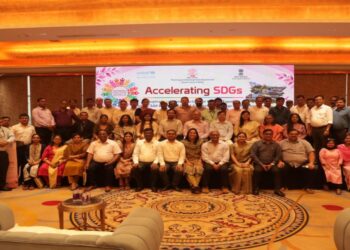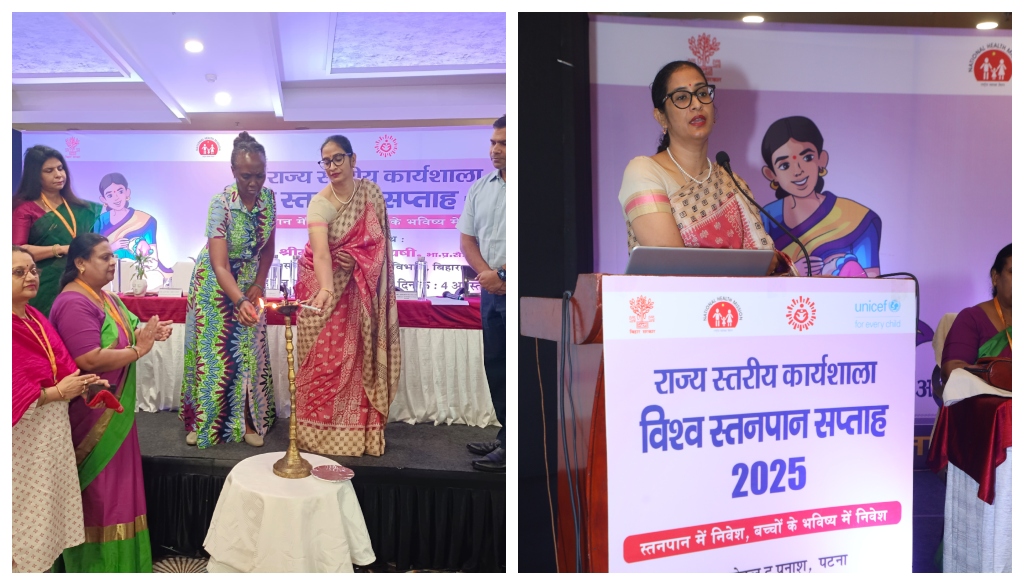
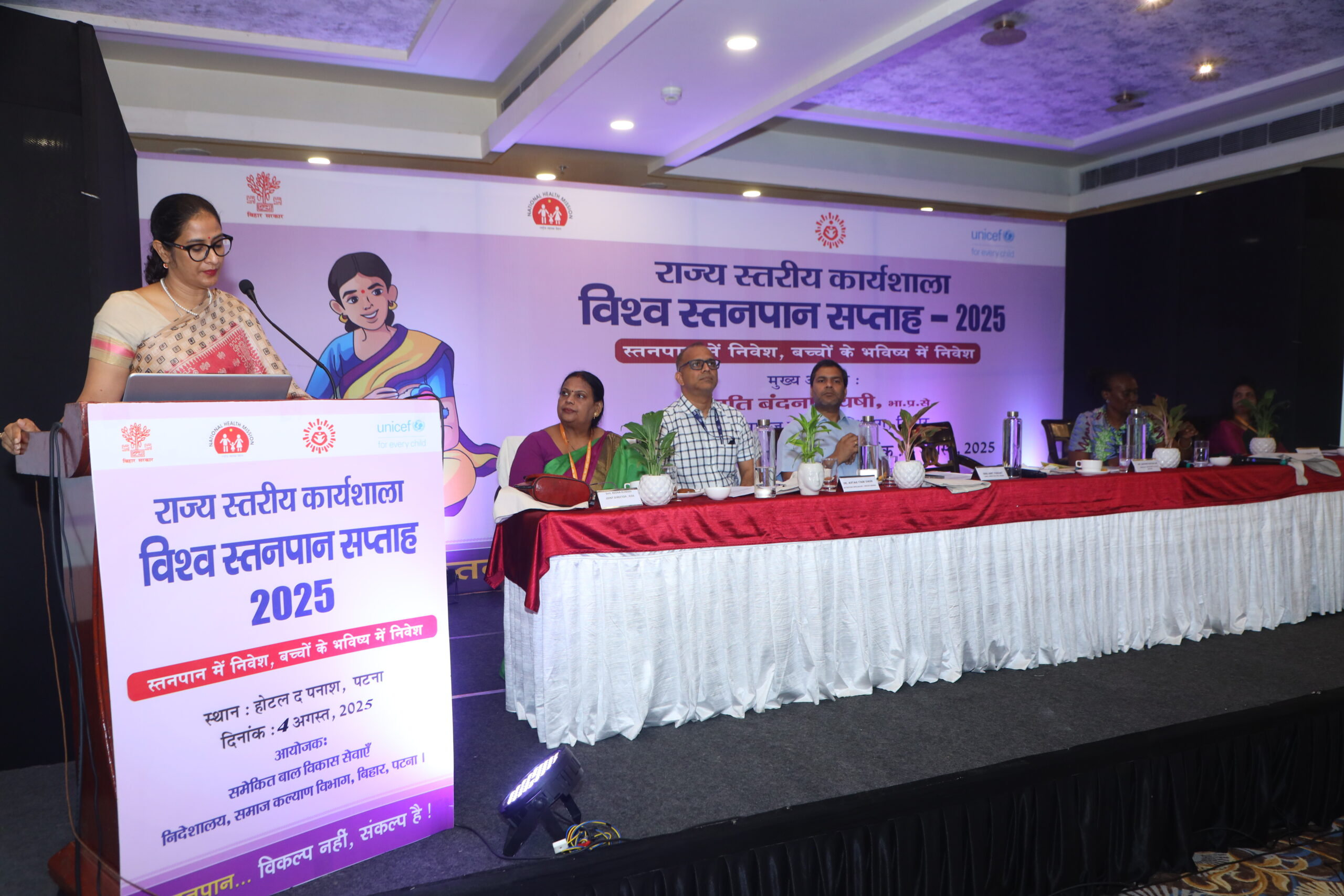
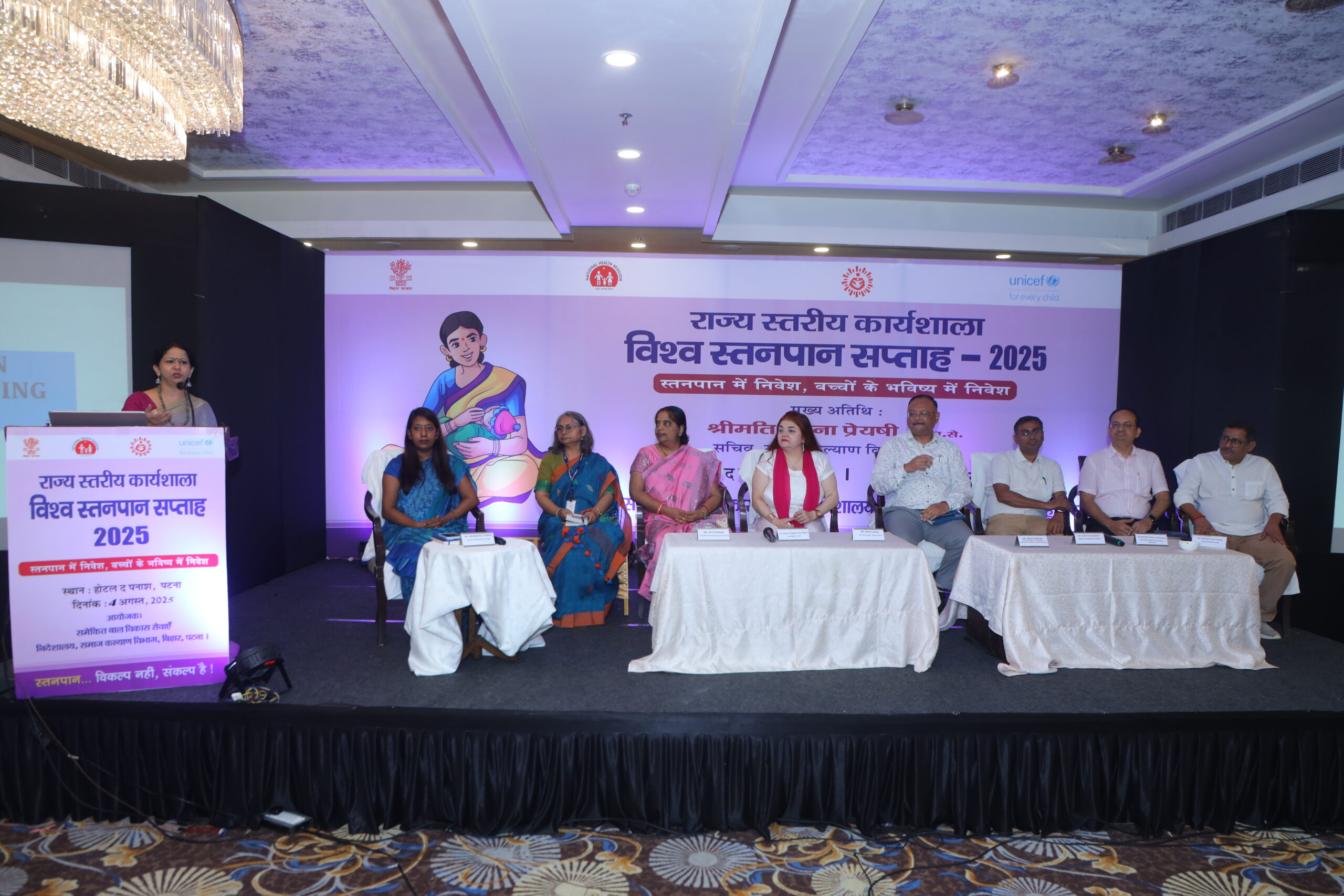
Patna: In a major push to improve child health outcomes, the Government of Bihar and UNICEF today co-hosted a high-level state orientation workshop to strengthen breastfeeding support systems across the state. The event, held as part of World Breastfeeding Week 2025, brought together officials from the Integrated Child Development Services (ICDS), the Social Welfare Department, and the Health Department to focus on this year’s theme: “Invest in Breastfeeding, Invest in the Future.”

The workshop underscored the critical importance of breastfeeding as a public health priority and a key investment in human capital. Participants addressed the need to create more supportive environments for mothers, especially those in the workforce, and to increase awareness at both the community and institutional levels, including in health facilities, workplaces, and Anganwadi Centres (AWCs).
Addressing the Gaps in Practice

Despite concerted efforts, Bihar continues to face significant challenges. According to National Family Health Survey (NFHS-5) data, only 31.1% of newborns in Bihar are breastfed within the first hour of birth, and just 59% are exclusively breastfed for the first six months. The workshop’s primary goal was to bridge these gaps through enhanced inter-departmental collaboration and the development of practical, actionable strategies.
Bandana Preyashi, Secretary of the Social Welfare Department, emphasized that while breastfeeding is a natural process, proper guidance and support are crucial. “We aim to ensure that ICDS and other department officials are well-informed so they can effectively train CDPOs, lady supervisors, and Anganwadi workers to support mothers,” she said. Preyashi also highlighted the need for sustained mental, social, and family support for mothers for up to two years. She poignantly noted that mothers should be seen as sensitive individuals, not just “milk-producing units,” and called for innovative solutions to provide maternity benefits to women in the informal sector.
A Focus on Strategic Planning and Community Engagement
Margaret Gwada, Chief of UNICEF Bihar, commended the state’s progress, pointing to the impressive scale-up of Infant and Young Child Feeding (IYCF) counselling centers from 44 in 2020–21 to 423 this year. She also praised the establishment of 305 breastfeeding corners in public health facilities. Ms. Gwada stressed the need to overcome behavioral and social barriers and work collectively to re-establish breastfeeding as a cultural norm.
Amit Pandey, Director of ICDS, set a collaborative tone for the day, highlighting the importance of departmental convergence for improved child nutrition. “Collective, sustained action is essential to build a nurturing ecosystem for mothers and newborns,” he stated.
The workshop featured a variety of engaging sessions, including an interactive Mentimeter quiz, field video presentations, and a dynamic panel discussion with experts from various medical and professional bodies. The second half of the day was dedicated to strategic planning under the Sustainable Growth and Performance Accountability (SGPA) framework, focusing on actionable next steps and monitoring mechanisms to drive measurable improvements.
The day concluded with a collective commitment from all participants to ensure every child in Bihar receives the best start in life through optimal breastfeeding practices and a strong, collaborative support system for mothers.