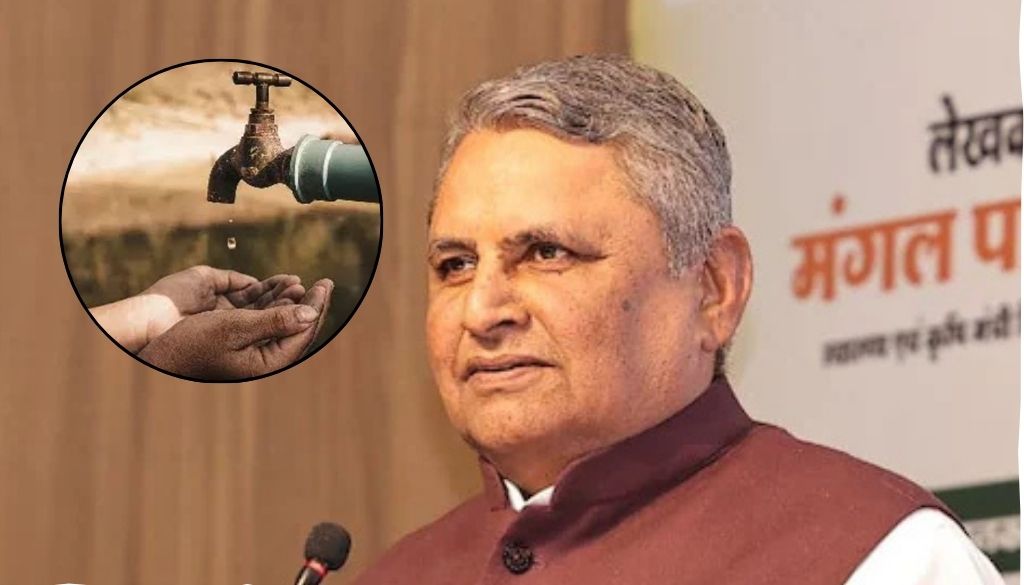
Patna: Bihar could face severe water stress by 2050 if current trends continue, the state’s Water Resources Minister, Vijay Chaudhary, warned on Friday in the Legislative Council. Recent studies, including research conducted by IIT Patna, highlight the rapid depletion of groundwater across the state.

Speaking during discussions on the 2026–27 budget, Chaudhary urged the House to adopt a long-term strategy for water management. “It is essential to halt the indiscriminate exploitation of groundwater,” he said, appealing for cooperation from all council members. “Concrete steps taken now can prevent a crisis in the future.”
To address immediate shortages, the state government has been transporting excess Ganga water to Rajgir, Gaya, and Nawada. Plans are also underway to lift water from the Son River to supply Aurangabad, Dehri, and Rohtas. Drinking water provision is being expanded from the Durgawati Reservoir to Bhabua and Mohania, with projects implemented in phases.

Chaudhary highlighted the alarming decline of the state’s rivers, noting that of Bihar’s roughly 600 rivers, around 250 are on the verge of extinction. “This threatens not only the environment but also agricultural productivity,” he said. The government has outlined plans to revive rivers through water conservation and rainwater harvesting initiatives, urging the House to develop a comprehensive strategy.
Increasing river siltation was another concern. Chaudhary said that silt accumulation reduces water-holding capacity, contributing to flooding and waterlogging. The government intends to prioritise silt removal and will make dredged silt available free of charge to individuals and organisations for soil filling, combining environmental restoration with resource utilisation.
The Legislative Council acknowledged that water scarcity may become one of Bihar’s most pressing challenges in coming decades. Groundwater conservation, river rejuvenation, and drinking water projects were emphasised as key priorities. Policy decisions will be guided by experts, and Chaudhary called for making water conservation a mass movement, stressing that the success of these plans will depend on effective implementation.