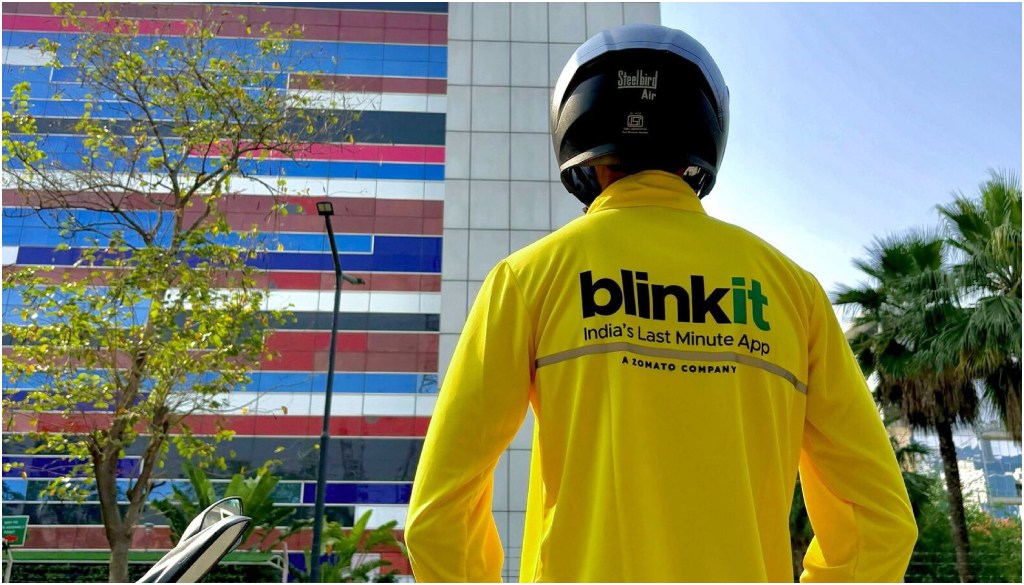
Patna: India’s largest quick-commerce companies, including Blinkit, Swiggy, Zomato and Zepto, have agreed to remove advertising claims that guarantee deliveries within 10 minutes, following strikes by delivery workers and intervention by the central government.

The decision was reached at a meeting chaired by the union labour minister, Mansukh Mandaviya, where senior executives from the companies assured officials they would no longer promote specific delivery timeframes that could endanger workers. The minister told the meeting that business models must not operate by putting riders’ lives at risk and warned that minute-based delivery targets posed dangers not only to couriers but also to other road users.
The government said it was preparing a comprehensive framework to strengthen social security and working conditions for gig workers, amid growing scrutiny of the sector’s labour practices.

For years, ultra-fast delivery had been the industry’s central selling point. Companies now say they will recalibrate marketing strategies without sacrificing efficiency, shifting away from countdown timers and slogans that create pressure on riders. Blinkit, for instance, has begun highlighting the breadth of its catalogue rather than speed alone.
Safety concerns have long dogged the model. Road safety groups and labour advocates argue that 10–15 minute guarantees encourage speeding and traffic violations. The issue intensified after delivery partners staged protests on December 25 and again on December 31, citing low pay and unsafe expectations during peak demand.
The move was welcomed by opposition MP Raghav Chadha, who said removing the branding would reduce “constant and dangerous” pressure on riders. In a post on X, he thanked the government for acting “at exactly the right time”, adding that visible timers on apps and uniforms amplified stress and risk on the roads.
Satyamev Jayate. Together, we have won..
I am deeply grateful to the Central Government for its timely, decisive and compassionate intervention in enforcing the removal of the “10-minute delivery” branding from quick-commerce platforms. This is a much needed step because when…
— Raghav Chadha (@raghav_chadha) January 13, 2026
Officials said the change would go beyond advertising. Companies are expected to adjust app algorithms and operational practices to ease time pressure. While delivery times may lengthen marginally, the government has signalled that compliance will be monitored, with penalties for violations to be set under forthcoming rules and oversight by the National Social Security Board.
There are concerns, however, about earnings. Because many riders are paid per delivery, fewer trips per hour could reduce daily income unless compensation structures are revised. Industry executives say discussions on pay and incentives are ongoing.
Rules under the Social Security Code 2020 covering gig and platform workers—including provisions for insurance and pensions—have been in effect since November 2025, but enforcement and coverage remain uneven.
Quick commerce relies on dense networks of “dark stores” located close to residential areas, enabling deliveries typically within 15–30 minutes. The sector has expanded rapidly alongside India’s gig economy, which employs more than 8 million people and could grow to 23.5 million by 2030, according to estimates by NITI Aayog.
With speed no longer the headline promise, companies are expected to compete on reliability, assortment, product freshness and customer support—marking a shift in how India’s fastest-growing delivery businesses define value.