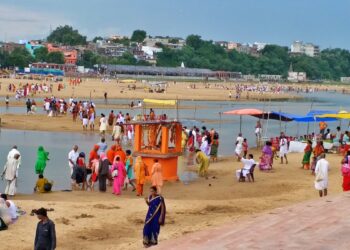
Varanasi: As dawn broke on Tuesday, the sacred ghats of Kashi came alive with chants of “Chhathi Maiya ki Jai”, rhythmic drumbeats, and the soft glow of countless diyas. Amid the vast congregation of fasting devotees offering Arghya to the rising Sun, one sight stood out — a pair of devotees dressed as Lord Shiva and Goddess Parvati, standing waist-deep in the Ganga, joining thousands in offering obeisance to Lord Surya.

Their symbolic presence — Shiva, the eternal ascetic, and Parvati, the nurturing mother — seemed to mirror the festival’s essence: a harmony of austerity and devotion, nature and nurture. Together, they offered water from small brass pots to the Sun, as women in vibrant saris bowed in reverence, ending their 36-hour nirjala (waterless) fast.
The final morning of Chhath Puja, celebrated across Varanasi, Lucknow, Gorakhpur, Prayagraj, Ayodhya, and Jaunpur, unfolded in an atmosphere of reverence and resilience. Despite a light morning drizzle in Lucknow and Gorakhpur, women continued their prayers undeterred, drenched yet unwavering, their eyes fixed eastward waiting for the first rays of the Sun.

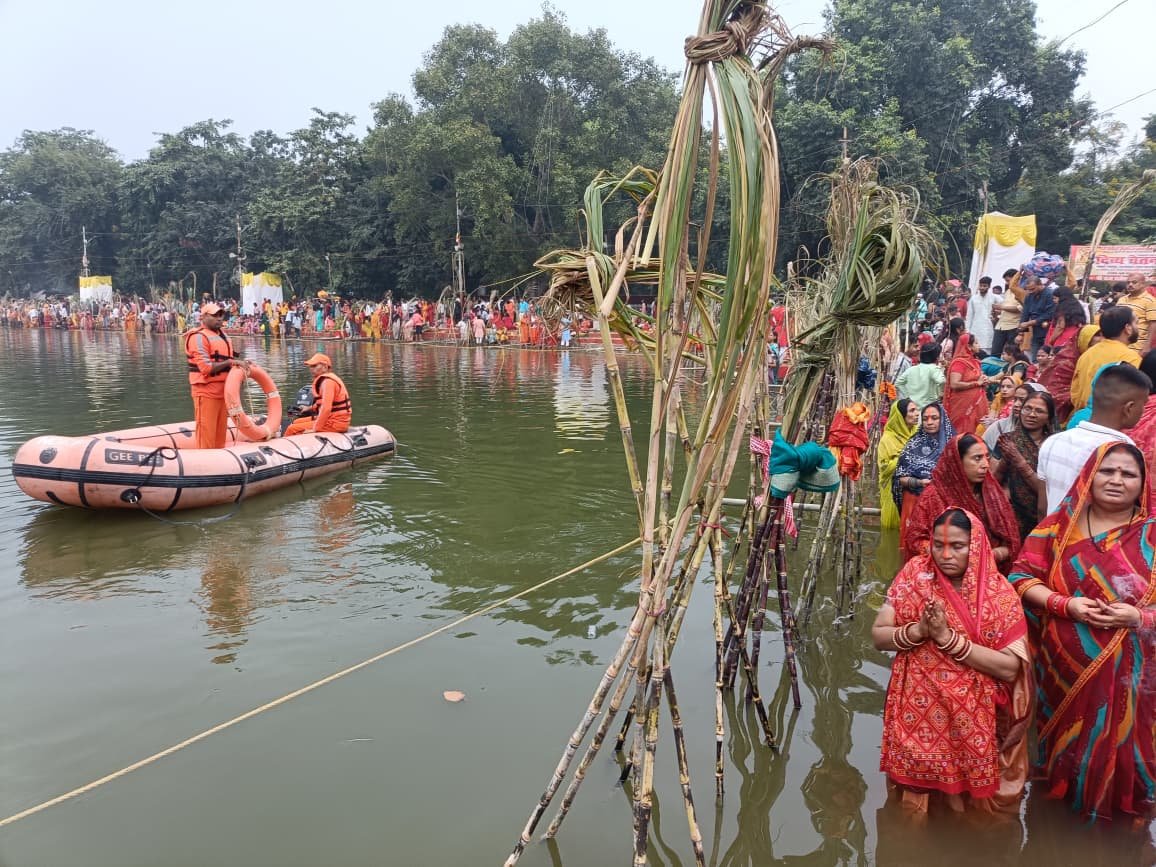
In Varanasi, more than 3,00,000 devotees gathered across the city’s 88 ghats, from Assi to Dashashwamedh. Chhath songs — sung in melodious Bhojpuri and Maithili — echoed through the dawn, blending devotion with nostalgia.
At Assi Ghat, foreign tourists stood captivated, photographing the spiritual spectacle — women holding soops of fruits and sugarcane, men lighting diyas, and the sacred riverside shimmering in orange hues as the first light pierced the clouds.
In Ayodhya, groups of devotees arrived beating drums and cymbals, transforming the ghats into scenes of celebration. In Prayagraj, women broke into impromptu dances after the ritual, celebrating the moment as much as the faith behind it.
For many, the image of “Shiva and Parvati” offering Arghya summed up the festival’s enduring magic. “It felt like watching the gods themselves bless the sunrise,” said Sushila Devi, a devotee from Bhadohi, who had travelled to Varanasi for her fifth Chhath. “The rain, the crowd — nothing mattered in that moment.”
As the morning light spread across the Ganga, devotees concluded their prayers by breaking their fasts — sipping water and eating thekua, a sweet made from jaggery and wheat flour. The four-day Mahaparv that began with Nahay-Khay ended in serenity, its rituals connecting ancient mythology, rural simplicity, and modern devotion.