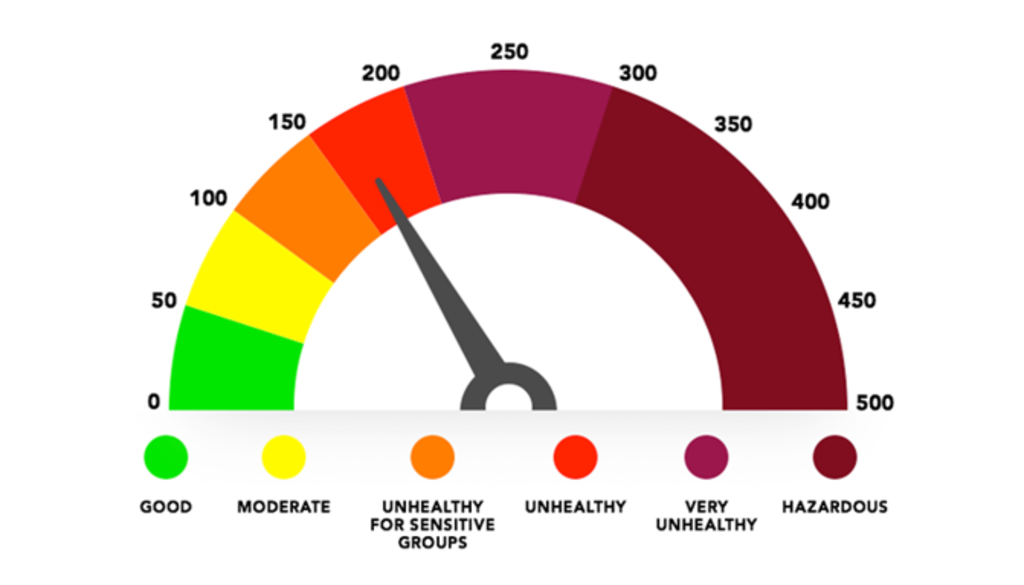
Patna/Darbhanga: Residents of Darbhanga are sounding the alarm over rapidly deteriorating air quality, accusing the municipal corporation of failing to regulate construction and enforce basic pollution-control measures. The city’s Air Quality Index (AQI) recently reached 155, placing it in the “moderate to poor” range and raising concerns among public health experts.

Pollution has become most visible around Benta Chowk, Laheriasarai, and Karpuri Chowk, where dust clouds settle over the roads from early morning, and schoolchildren travel through a thick haze, according to locals. Environmental guidelines for multi-storey building construction are being routinely ignored, residents say, allowing piles of soil and debris to accumulate in public areas.
Municipal promises to plant urban forests and public gardens—widely publicised last year as part of a pollution-control drive—never materialised. “The plan remained on paper,” residents said, pointing to empty plots where greenery was promised.

Darbhanga’s main air monitoring station has been non-functional since a fire destroyed equipment in January 2023. The display board at the Town Hall last showed AQI data on January 14, 2023, and despite repeated appeals from neighbourhoods such as Ramanand Path, repairs have not been made. Without functioning monitors, residents say they have no way to assess what they are breathing.
Doctors report rising cases of respiratory illnesses, throat and eye irritation and headaches, especially in winter when cold air traps pollutants closer to the ground. The AQI had previously spiked as high as 183, considered “poor, prompting fears that air quality could soon approach “very poor” or “severe” levels.
Pollution experts argue that regular road cleaning, water sprinkling and dust-control measures could cut particulate pollution by 15–20%, but these steps are “either not being implemented or limited to areas near the officials’ residences,” residents allege.
The municipal corporation says guidelines for both new and existing buildings exist, and that a task force conducts inspections and fines developers for dumping materials on roadsides. “Action is taken based on public complaints,” said Pradeep Kumar, City Manager. However, residents argue that enforcement remains inconsistent and reactive rather than preventive.
As unchecked construction and civic apathy collide, the city’s pollution levels continue to climb—leaving Darbhanga to choke in the fallout.