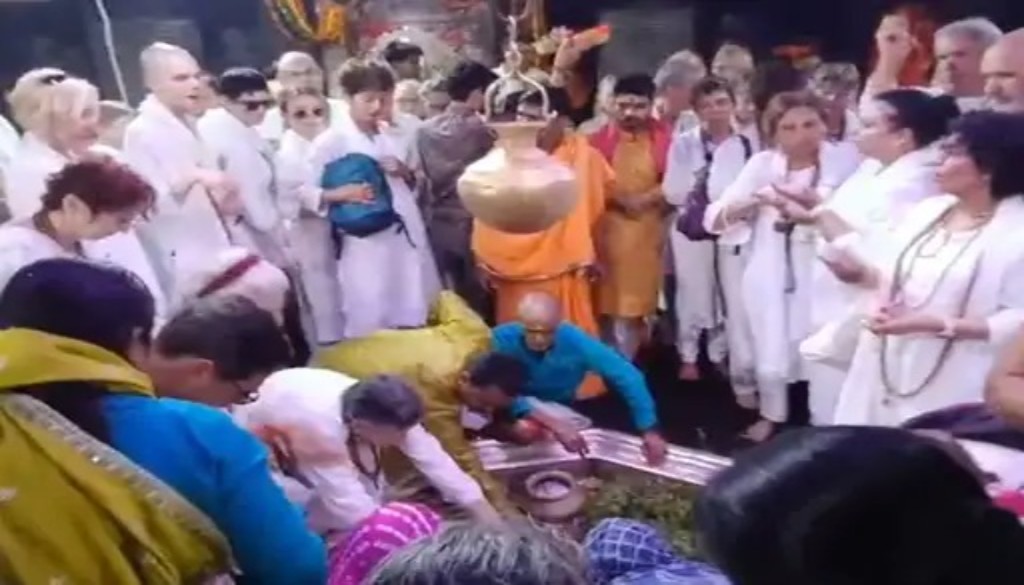
Gaya: A group of 76 foreign devotees from nearly 40 countries performed traditional Hindu pinddaan rituals on Monday at Devghat, situated along the Falgu river in GayaJi, in a ceremony that blended ancestral reverence with prayers for victims of modern conflict.

Arriving in the afternoon accompanied by local priests, the participants — from countries including the United States, France, Canada, Australia, Ukraine and Russia — took part in the centuries-old ritual believed to bring peace to departed souls. The ceremony lasted around 90 minutes and was conducted according to Sanatan traditions, complete with Vedic chants.
In a notable gesture, the group extended their offerings beyond personal ancestors, dedicating special prayers to those who lost their lives in the US-Iran conflict. Local priests said the inclusion reflected a broader humanitarian sentiment among participants.

“There is a deepening faith among international visitors in Sanatan dharma,” said Chhotu Barik, a local priest who helped conduct the rituals. “Despite language barriers, we were able to complete the process with the help of translators.”
Gaya Ji, long regarded as one of Hinduism’s most sacred sites for ancestral rites, is witnessing a steady increase in foreign participation, not only from followers of Buddhism — for which nearby Bodh Gaya is globally known — but also from those drawn to Hindu traditions.
Kamla Barik, another priest, noted that the town’s spiritual significance is gaining wider recognition. “Foreign visitors are connecting more deeply with these traditions. Their presence in such large numbers reflects that shift,” he said.
Participants described the experience as profoundly moving. One devotee, Divesh Das, said the rituals left a lasting impression. “Being here and performing pinddaan has been a deeply spiritual experience. The traditions and devotion are powerful,” he said.
The group had been in Bodh Gaya for the previous three days attending an international inner peace conference, which drew spiritual seekers from around the world. Following the conference’s conclusion, they travelled to Gaya to perform the one-day ritual at the Vishnupad temple complex.
Observers say the event underscores how Gaya Ji’s religious and cultural significance is increasingly resonating beyond India’s borders, attracting a global audience seeking both personal and collective spiritual meaning.