Patna: The Indira Gandhi Institute of Medical Sciences (IGIMS) has announced plans to introduce robotic surgery and establish advanced simulation and skills laboratories, as part of an expansion of high-technology healthcare services in Bihar.

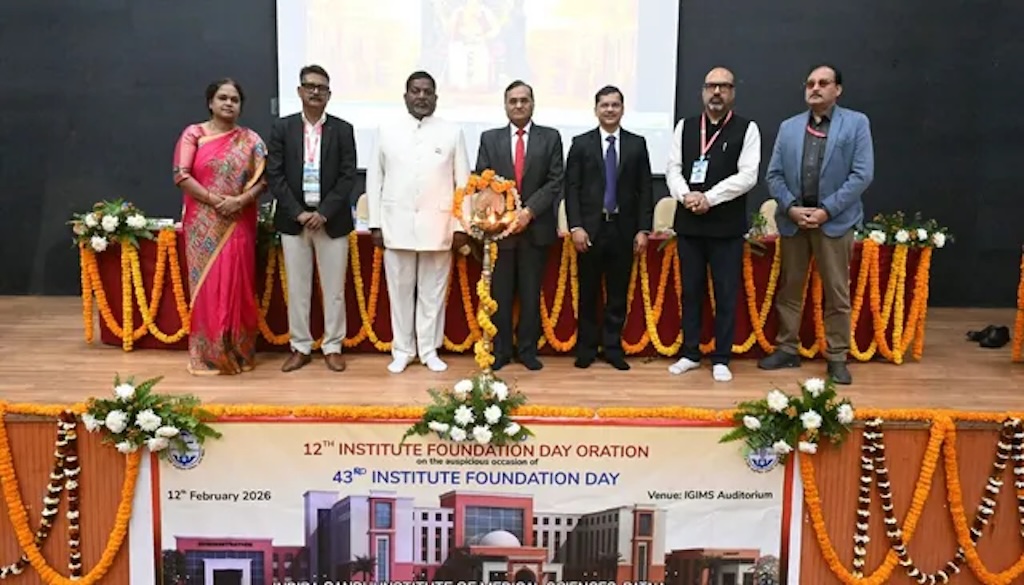
The announcement was made by Prof Dr Binde Kumar, director of IGIMS, during the institute’s 43rd foundation day celebrations. He said preparations were under way to launch robotic-assisted procedures across departments including general surgery, urology, cardiology, neurology, orthopaedics and oncology.
A simulation and skills lab is also expected to begin operations this month. The facility will allow doctors and medical students to practise complex procedures on artificial models before performing them on patients, a move intended to reduce clinical errors and improve surgical outcomes.

Robotic surgery, officials said, would enable greater precision, minimise blood loss and shorten hospital stays, allowing patients to recover faster.
IGIMS has already introduced a robotic physiotherapy system aimed at improving rehabilitation outcomes for patients with paralysis, stroke and spinal injuries. According to the institute, the technology has enhanced the quality and safety of post-injury care.
The foundation day event was inaugurated jointly by Prof (Brig) Dr Raju Agarwal, executive director of All India Institute of Medical Sciences Patna, alongside senior faculty members from IGIMS and visiting specialists, including Dr Manish Rathi of Postgraduate Institute of Medical Education and Research.
A college magazine was released and a health exhibition featuring 60 stalls was opened to the public, offering information on disease prevention and early detection.
Addressing the gathering, Agarwal said empathy remained a doctor’s greatest asset. “Patients may forget their illness, but they never forget how their doctor treated them,” he said, urging greater focus on research aimed at making treatments more affordable and accessible.
During a lecture on systemic lupus nephritis, Rathi warned against ignoring persistent swelling in the body, describing it as a potential early sign of autoimmune diseases such as systemic lupus erythematosus (SLE). He said the condition, more common among young women, could rapidly damage the kidneys if not detected early.
Symptoms including swelling, frothy urine, extreme fatigue and facial puffiness should prompt immediate medical consultation, he added.
Rathi also outlined a revised treatment approach for lupus-related kidney damage that he said had reduced costs by up to 90%. Instead of relying primarily on mycophenolate mofetil, doctors are increasingly using lower doses of cyclophosphamide for immunosuppressive therapy, leading to fewer side effects and improved outcomes.
Prof Dr Amresh Krishna, head of nephrology at AIIMS Patna, noted a steady rise in kidney disease cases. He said more than half the patients attending outpatient departments had uncontrolled diabetes or hypertension, and around 50% of dialysis patients were diabetic.
He cautioned that persistently high blood sugar levels significantly increase the risk of chronic kidney disease, underscoring the importance of early screening and preventive care.
As IGIMS looks to expand its technological capabilities, officials said the goal was to combine advanced treatment methods with accessible, patient-centred healthcare for the state.