
Patna: A new effort to conserve and develop Mundeshwari Temple, one of Bihar’s oldest living temples, is looking towards an unlikely lesson from Madhya Pradesh: the restoration of the Bateshwar temple complex.

Padma Shri K.K. Muhammed, a renowned archaeologist and former Regional Director of the Archaeological Survey of India, visited the temple complex in Kaimur and suggested that its restoration could follow the scientific approach used at Bateshwar.
Muhammed said the temple’s historical character should be preserved while its architectural remains and original stones are studied and, where possible, restored to their authentic positions.

From A Heap Of Stones To Bateshwar’s Revival
The Bateshwar temple complex in Madhya Pradesh had once been reduced to a scattered collection of stones after years of neglect, natural erosion and the collapse of its temples.
According to Muhammed, the ASI surveyed and numbered individual stones at the site before using anastylosis, a conservation technique in which original architectural elements are reassembled in their authentic positions.
The approach helped restore the Bateshwar complex and turned it into a major heritage attraction.
Muhammed suggested that a similar scientific methodology could be explored at Mundeshwari, with archaeological experts examining surviving stones and architectural remnants before attempting restoration.
He stressed that the process would require patience and scientific planning rather than hurried reconstruction.
A Temple With More Than 1,600 Years Of History
Mundeshwari Temple stands atop the approximately 600-foot-high Panwara Hill in Bhagwanpur block of Kaimur district.
The temple is regarded as one of India’s oldest living temples, with worship continuing at the site for centuries. According to archaeologists, inscriptions found at the site date to 389 AD.
Built in the Post-Gupta style, the temple is notable for its unusual octagonal structure and intricate carvings.
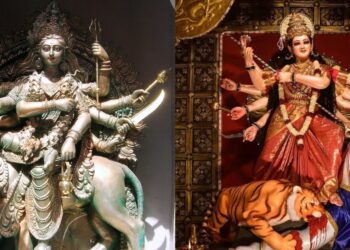
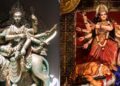
Its sanctum houses a Panchmukhi Shivling, while an idol of Maa Mundeshwari in her Mahishasuramardini form is installed in the eastern section of the temple.
A longstanding attraction for devotees is the reported change in the appearance of the Shivling depending on the position of the sun.
Preserving Heritage While Supporting Tourism
Muhammed described Mundeshwari as an important cultural heritage site for Bihar and India and said its preservation was a responsibility for future generations.
He expressed confidence that cooperation between the state government, archaeological experts and local residents could help advance the conservation effort.
A scientifically managed restoration, he suggested, could both strengthen the temple’s historical significance and give a further boost to religious and heritage tourism in Kaimur.
The challenge will be to develop the site without compromising the character and authenticity of a temple that has remained a place of worship for more than 1,600 years.