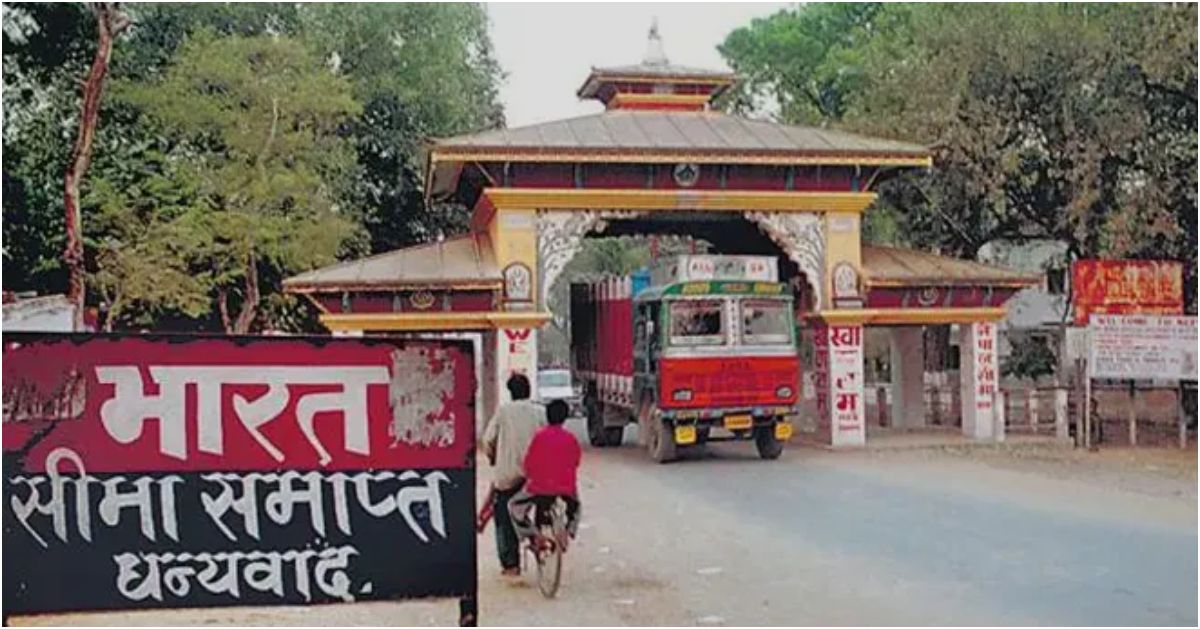
Patna: The Government of Nepal has increased the customs duty exemption limit for personal-use goods brought across the India-Nepal border, raising the threshold from 100 Nepali rupees to 500 Nepali rupees.

Under the revised rule, travellers entering Nepal through land border points can now carry daily-use items worth up to 500 Nepali rupees without paying customs duty. The new provision came into effect on Wednesday following a gazette notification issued by Nepal’s Ministry of Finance.
The decision is expected to ease cross-border movement and shopping for small traders, labourers, farmers and consumers living in border regions. It is also aimed at reducing paperwork and disputes linked to small-scale purchases made across the border.

Previous Limit Triggered Opposition
Earlier, customs duty was imposed on goods valued above 100 Nepali rupees, equivalent to around Rs 62.50 in Indian currency. The restriction drew criticism from residents and traders in border districts, who argued that the limit was impractical for everyday purchases.
The issue was raised in Nepal’s Parliament, and widespread opposition prompted the government to review the policy. The revised exemption limit of 500 Nepali rupees is equivalent to approximately Rs 312.
According to the new arrangement, customs officials posted at border checkpoints may permit the entry of personal-use goods worth up to 500 Nepali rupees without levying duty, subject to applicable conditions.
Relief for Students Retained
The government has retained existing exemptions for Nepali students studying in India. Students will continue to be allowed to bring tablets and laptops into Nepal for personal use without additional customs charges.
Officials at the Nepal Mayaganj Small Customs Outpost confirmed that the revised notification has replaced the earlier 100-rupee exemption limit with the new 500-rupee threshold.
Mixed Reactions from Border Residents
The announcement has received a mixed response from people living along the India-Nepal border.
While some residents welcomed the relaxation of customs rules, others said the increase remains insufficient given current prices and the volume of daily cross-border trade. Traders and local residents argued that goods worth 500 Nepali rupees represent only a small amount in practical terms.
Several border residents have urged the Nepal government to further raise the duty-free limit, with some calling for an exemption threshold equivalent to at least Rs 2,000 in Indian currency.
Impact on Border Trade
The revised customs policy is expected to provide some relief to consumers and small-scale traders who regularly cross the border for daily purchases. It may also support commercial activity in border markets and strengthen economic and social ties between communities on both sides of the India-Nepal border.
However, stakeholders say the long-term impact of the measure will depend on whether the government considers further revisions to the exemption limit in response to concerns raised by border residents and traders.