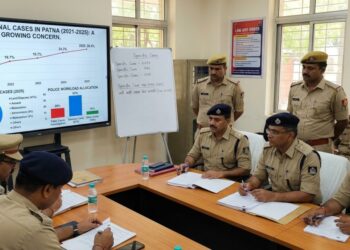

Patna: The misuse of artificial intelligence to create obscene images has added a new dimension to cybercrime in the city, with the Patna Cyber Police Station receiving around 700 complaints over the past two months involving threats to circulate private photographs or AI-edited images on social media.

Police said FIRs have been registered in 45 cases, while preliminary inquiries, known as Sanha, have been initiated in around 600 cases. The cyber police station receives about 20 to 30 complaints every day, of which around 10 to 15 relate to social media harassment.
Women and young girls account for a significant proportion of the victims, although men have also reported similar incidents.

Former Relationships Linked To Most Cases
According to cyber police investigations, around 80% of the reported cases involve people who had previously been in a romantic relationship.
In several cases, police have found that former partners allegedly used AI and deepfake tools to alter ordinary photographs and turn them into obscene images after a relationship ended.
The manipulated images are then allegedly used to harass or defame the victim, with threats to publish them on platforms such as Instagram and Facebook.
Threats Of Viral Circulation And Extortion
In some cases, victims are allegedly asked to pay money to prevent the manipulated images from being circulated online.
A Kankarbagh case involved an edited photograph of a young man’s sister being sent to him through WhatsApp. The sender allegedly demanded Rs 50,000 and threatened to upload the image on Instagram within four to five days if the money was not paid.
Police said such incidents show how personal disputes can escalate into blackmail and cybercrime when digital tools are misused.
Student Abandons Studies After Image Circulation
In another case from the Beur police station area, a college student’s private photograph was allegedly circulated widely on Instagram.
The student reportedly faced a barrage of obscene and offensive comments after the photograph was posted online. The incident caused severe mental distress and, according to the account provided to police, she eventually stopped her studies because of concerns over social stigma.
AI-Generated Image Used To Harass Woman
In a separate case, a woman’s photograph was allegedly taken from her Facebook profile and digitally combined with a beach scene using AI to create an offensive image.
The manipulated image was subsequently posted on Instagram. The woman has reportedly experienced significant mental distress and expressed concern about the impact of the incident on her family.
Fake Profiles And Foreign Servers Pose Challenges
Cyber police investigations have also identified cases involving fake social media profiles and accounts that appear to be operated from outside India.
Police face difficulties in tracing the accused when fake identities, foreign servers and multiple digital accounts are involved. Investigators are examining technical and digital evidence to identify those responsible.
Police Advise Victims Not To Pay
Cybercrime officials advise victims not to pay money to blackmailers, as payment may lead to further demands rather than ending the harassment.
Victims should preserve chats, screenshots, call recordings, mobile numbers, profile names and URLs connected to the incident. Such evidence can help investigators trace the accused.
If an objectionable image has been posted online, victims should report the content directly to the concerned social media platform instead of forwarding it to others.
How To Report Cybercrime
Victims can contact the National Cyber Crime Helpline at 1930 or file a complaint through the government’s National Cyber Crime Reporting Portal
The increasing use of AI to manipulate photographs highlights the need for victims to report such incidents promptly and preserve digital evidence rather than treating online threats as merely personal disputes.