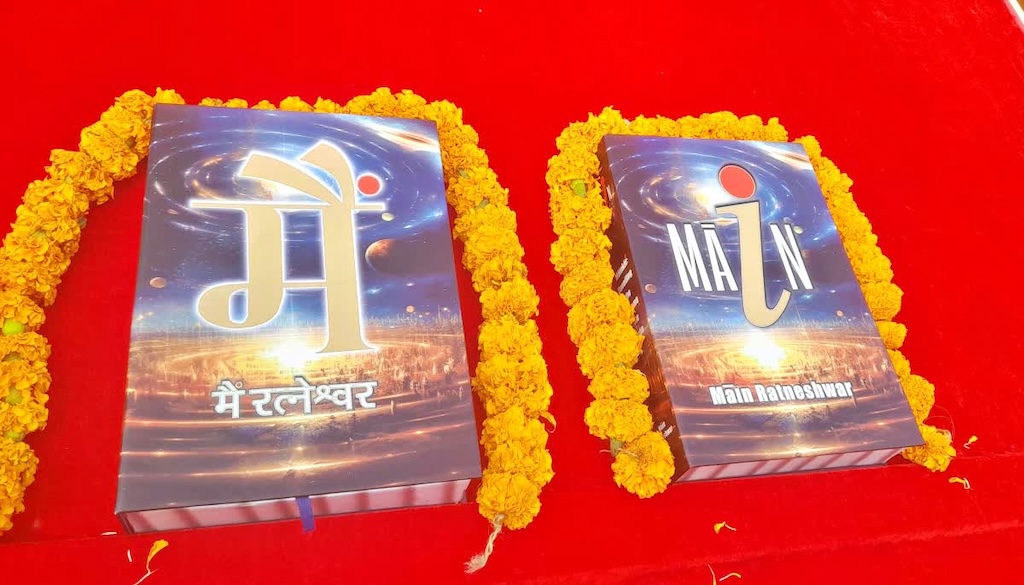
Patna: Visitors at the Patna Book Fair are accustomed to browsing novels, textbooks and children’s literature, but this year an unexpected attraction is pulling crowds towards one particular stall: a book priced at Rs 15 crore. Titled I – Ratneshwar, the manuscript is being promoted as the most expensive book ever produced in India and has quickly become the talking point of the fair.

The book, described by its author Ratneshwar, a Bihar-born writer and spiritual commentator, is framed not as a literary work but as a philosophical text rooted in his experience of spending more than a year in solitude. The stall displaying the book has been drawing steady streams of onlookers—some curious, others incredulous—many of whom are lining up simply to take photographs beside the display.
According to Ratneshwar, the work emerged during an extended period of isolation in which, he says, he experienced a form of spiritual revelation. He describes the manuscript as a treatise on the philosophy of the self—what he calls the “I”—and claims that it documents a progression from belief to knowledge as understood through personal experience rather than inherited ideas. “This is not just a book,” he said at the fair, “but a scripture born from a state of deep awareness.”

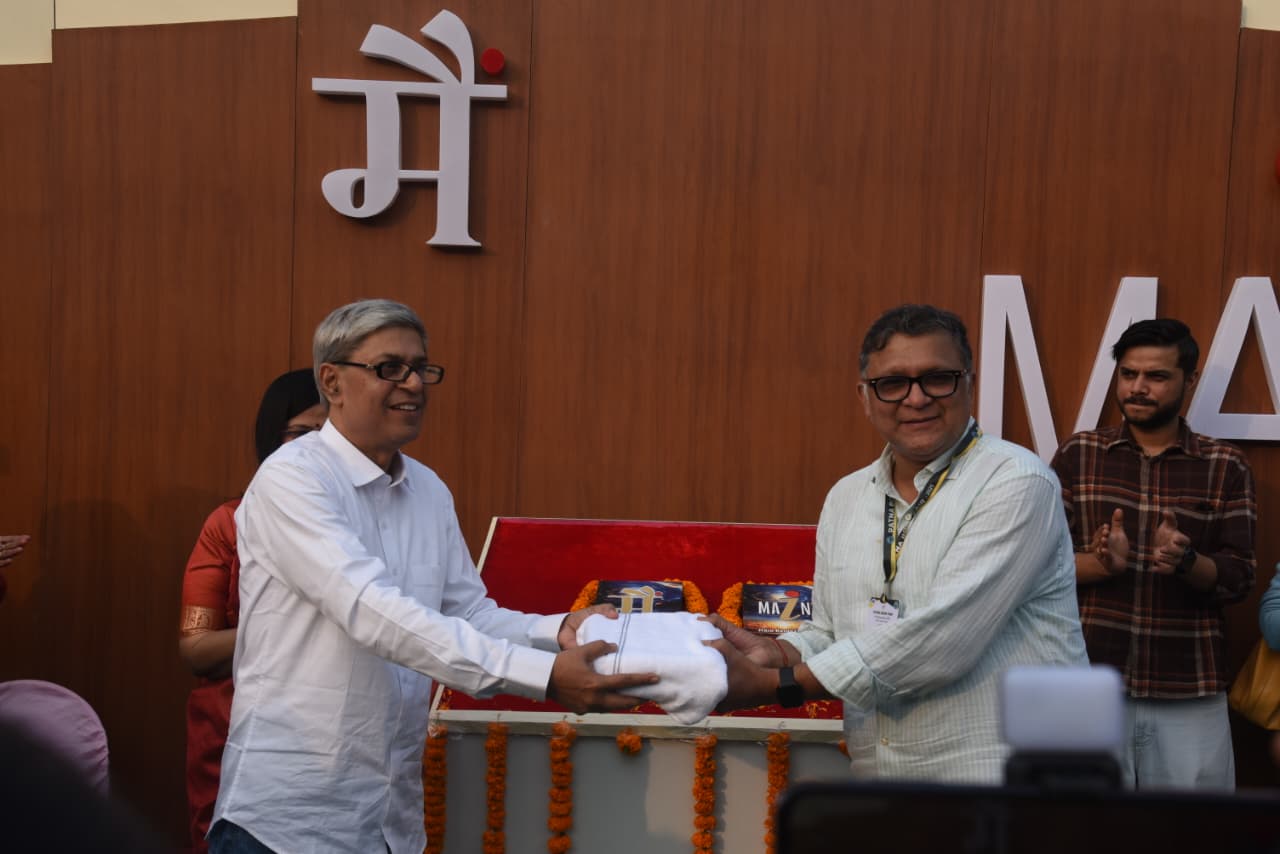
Only 16 copies have been printed. Of these, Ratneshwar plans to gift 11 to individuals he declines to name, leaving just three available for purchase. He insists the pricing was determined through what he describes as a “divine instruction,” received during what he claims was a moment of heightened consciousness.
The author recounts that the text was “revealed” to him on a single night—September 6-7, 2006—between 3:00 am and 6:24 am. He says he remained in a state of “Sthitaprajna,” or unwavering equanimity, for 21 days prior to the revelation. During this period, he claims to have experienced visions relating to the ultimate reality (Brahman) and the mythical Raas Leela.
The 408-page work traverses themes of Karma Yoga, Jnana Yoga, Dhyana Yoga and Bhakti Yoga, presenting a narrative in which death is treated not as an end but as a change of form within an “eternal journey of existence.” Ratneshwar says his aim is not mass readership but awakening individuals to what he calls the “direct knowledge” of their own inner self.
The book also makes esoteric claims, including references to the “colours of human aura” and the interaction of bodily water with external elements—analogies he links to classical stories such as Tansen’s mythical ability to summon rain through music. It discusses “12 gates of life” and “19 arts,” expanding beyond the traditionally cited 16.
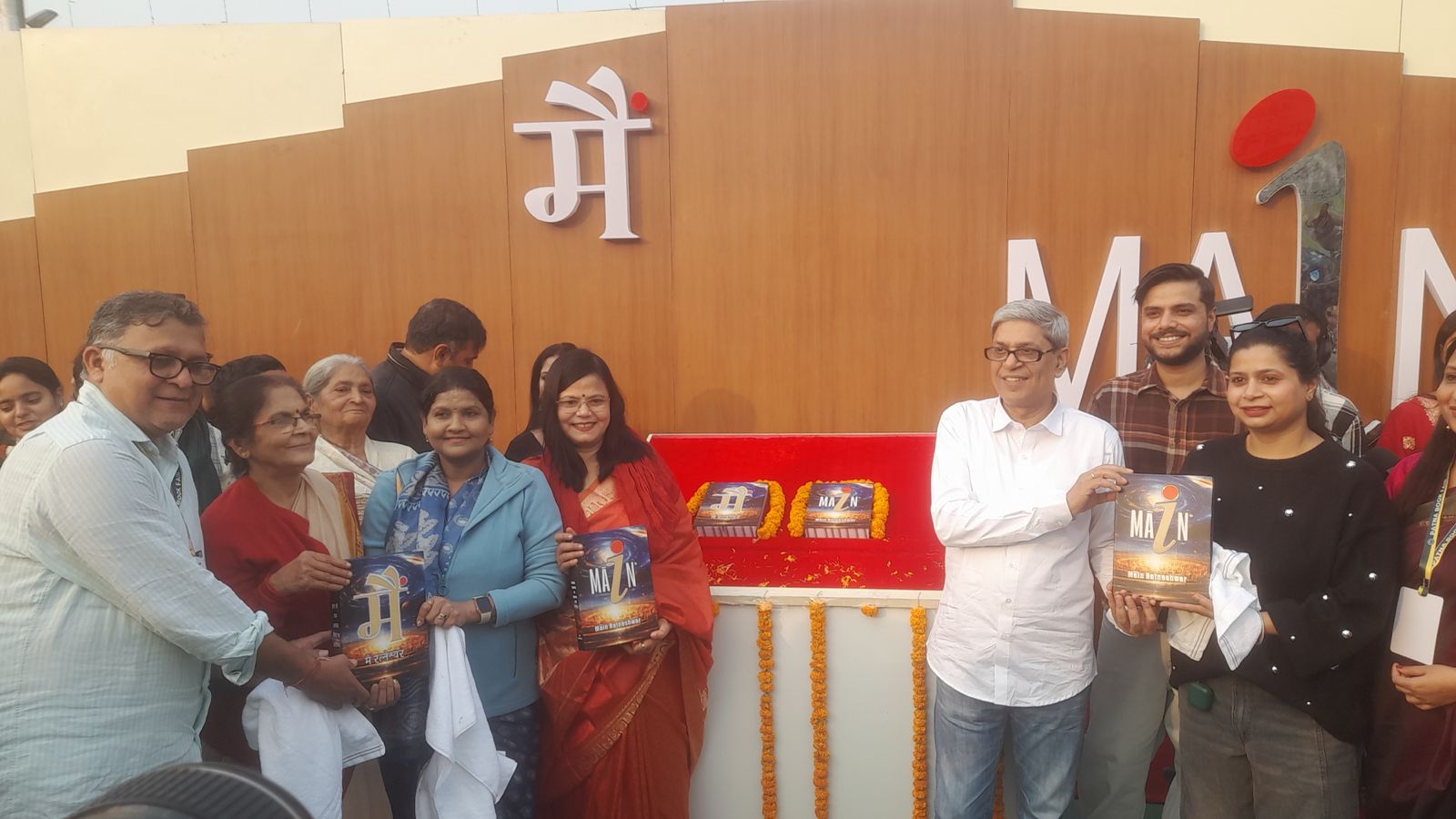
While reactions at the fair range from fascination to scepticism, the presence of the book has undeniably become one of the fair’s most talked-about features. The display has stirred curiosity not only for its extraordinary price but for the philosophical and mystical assertions surrounding its creation.
For many visitors, I – Ratneshwar is less an object of purchase than a spectacle—one that has added a layer of intrigue to this year’s fair and sparked conversations across Patna about the nature, meaning and value of knowledge itself.