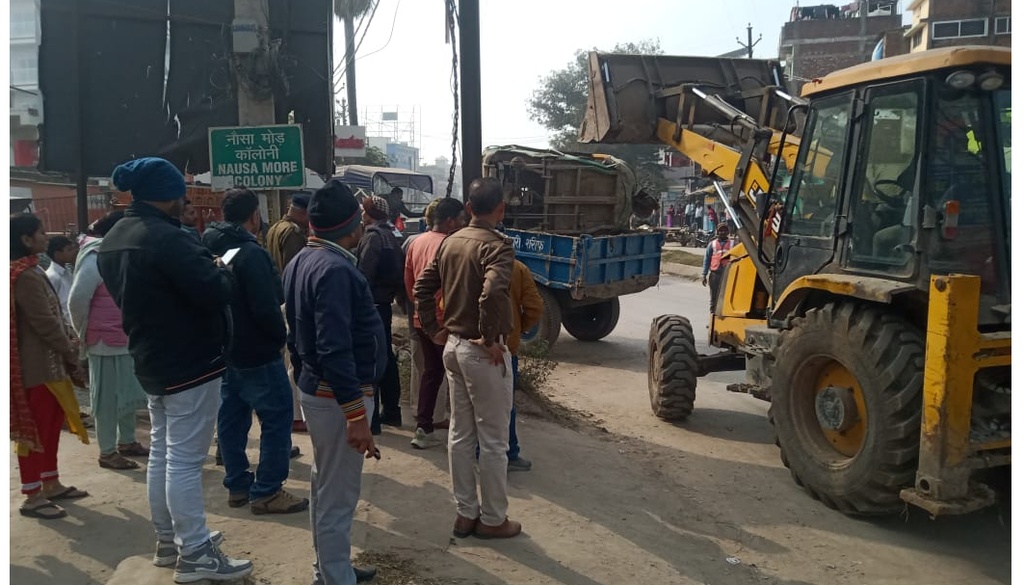
Patna: The Patna district administration has launched a special campaign to remove encroachments from 26 major roads across the city, aiming to ease traffic congestion and improve public mobility.

The drive, which began on Friday, will continue until January 31 and will cover key stretches from Danapur to Patna City. Officials said the operation is part of a broader effort to ensure smoother traffic movement and safer roads for residents.
District magistrate Tyagarajan SM said nine dedicated teams had been deployed to carry out the operation and warned that any attempt to obstruct officials would invite strict action. “Ensuring public convenience and smooth traffic movement is the administration’s priority,” he said.

The campaign is being implemented across six municipal zones — Nutan Rajdhani, Patliputra, Kankarbagh, Bankipore, Azimabad, and Patna City — as well as the municipal council areas of Khagaul, Phulwari Sharif, and Danapur Nizamat. A zone-wise calendar has been issued to guide the removal process throughout January.
Authorities said the focus would be on clearing illegal roadside structures, temporary shops, unauthorised stalls, and other obstructions that reduce road width and contribute to congestion. Police personnel have been deployed at sensitive locations to maintain order during the operation.
Among the roads identified for action are Boring Road, Bailey Road, Atal Path, JP Ganga Path, Nehru Path, Kankarbagh Main Road, Patna Junction Road, Gandhi Maidan stretches, Danapur railway station road, Chitkohra bridge, Raja Bazar, Anisabad, and the route from Kargil Chowk to NIT.
Officials said the drive was not intended as a one-off measure but part of a sustained policy to keep city roads free of encroachments. Shopkeepers and vendors affected by the campaign have been given prior notice, with assurances that alternative arrangements would be explored where feasible.
The administration has appealed to residents to cooperate with the campaign and avoid future encroachments, saying the success of the initiative depends on public participation as much as enforcement.