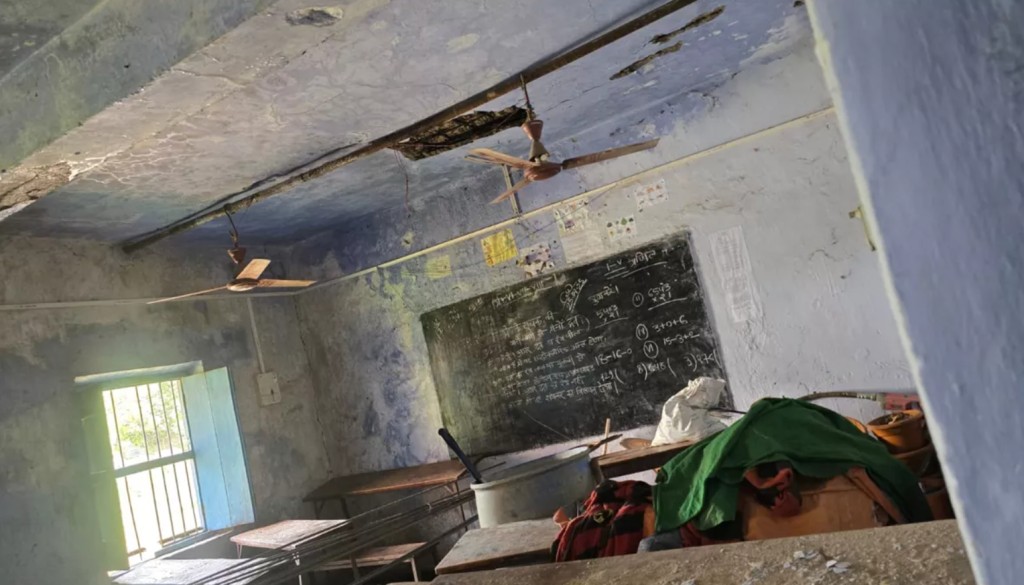
Patna: In parts of Bihar’s Patna district, government schools are operating under hazardous conditions, with broken roofs, crumbling walls, and an alarming lack of basic infrastructure such as drinking water, toilets, and electricity. Reports from Barh, Paliganj, and Athmalgola blocks reveal a bleak reality for students and teachers who continue to study and work in fear of structural collapse and neglect.

At Upkramit Madhya Vidyalaya Gulabbag in Barh, 145 students are being taught in just two severely dilapidated rooms, with plaster frequently falling from the ceiling. Acting principal Satish Chandra Verma said four women teachers manage the school, while lessons often take place in the open verandah due to a shortage of classrooms. The school has no playground, no boundary wall, and unreliable electricity, making the environment both unsafe and unconducive to learning. Verma added that repeated written complaints to education authorities have gone unanswered.
A similar situation prevails at Government Basic School in Ward 18 of Paliganj, where two schools are being run in just three functional rooms. “Most rooms are unfit for use due to structural damage,” said headmaster Rajendra Prasad. With cattle frequently wandering into the premises through the broken boundary wall, classes are held in the verandah. Requests for construction of new rooms have been submitted, he added.

In Chanda village of Athmalgola block, Primary School Scheduled Caste and Upkramit Madhya Vidyalaya Chanda share a single, flood-prone campus. The building is in such disrepair that during monsoon, the schools remain shut. The stairs are crumbling, and there is no provision for drinking water or functioning toilets. Classes are held in one upper-floor room accessed via a narrow, unsafe path. None of the 136 enrolled students or three teachers were present during a recent visit. Acting headmaster Balbir admitted that although 370 children are enrolled across both schools, only one classroom is in use.
Across the district, water seeps through cracked roofs and walls during heavy rain, while extreme heat and downpours force schools to shut or shift classes to verandahs. With many buildings structurally compromised, the risk of serious accidents looms large. Broken boundary walls allow stray cattle and antisocial elements to enter freely, raising serious safety concerns for both children and staff.
Despite some progress in educational infrastructure, these cases highlight the urgent need for large-scale renovation, proper sanitation, and secure environments in Patna’s government schools. Community members and educators say that while complaints are frequently raised, they rarely receive a response from authorities. The physical state of these schools continues to be a stark reflection of systemic neglect in Bihar’s public education sector.