Patna: Residents in Patna could soon face fines for littering and other civic violations, as authorities move to introduce an AI-driven surveillance system aimed at improving urban management.

AI Surveillance To Track Civic Violations
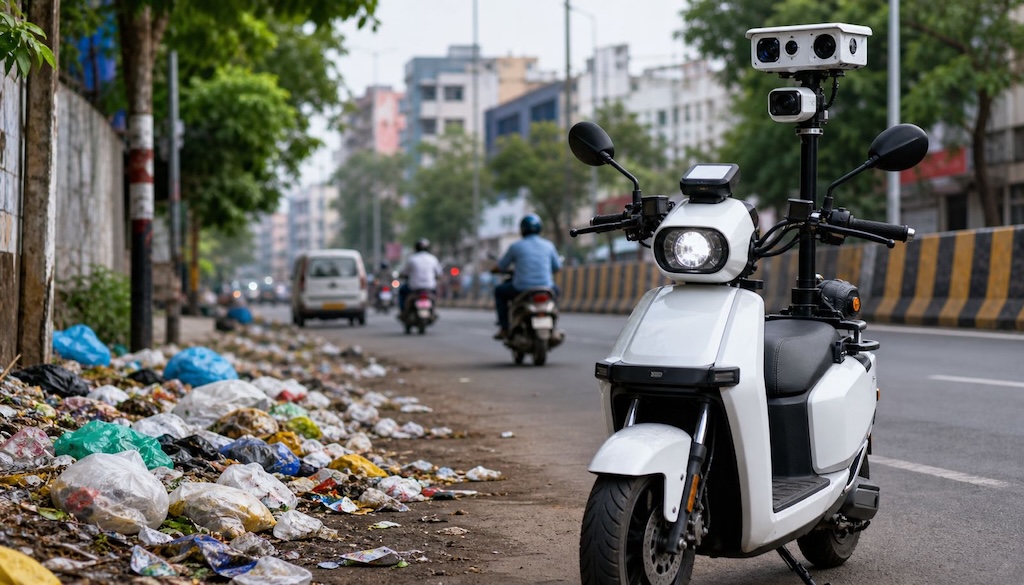
The initiative, led by Patna Smart City Limited, will deploy 19 electric two-wheelers equipped with high-resolution cameras to patrol all 75 wards under the Patna Municipal Corporation. The vehicles, branded “Nagar Netra” (City’s Eye), are designed to monitor public spaces and flag violations such as indiscriminate garbage dumping.

Each vehicle will be fitted with 4K dashcams offering a 110-degree wide-angle view, alongside GPS-enabled systems to accurately pinpoint the location of any issue detected. Officials said the vehicles will operate on a rotational basis, ensuring coverage across all neighbourhoods.
Real-Time Monitoring And Automated Reporting
The system will identify a range of civic concerns, including garbage accumulation, open manholes, malfunctioning streetlights and illegal encroachments, transmitting real-time alerts to a central control room. Dedicated charging infrastructure will be set up at the Integrated Command and Control Centre (ICCC) and other designated sites to support the electric fleet.
A Central Civic Services Operations Centre (C-SOC) will be established within the ICCC to process and analyse incoming data. Using AI-based engines, the platform will automatically detect issues such as large garbage piles, potholes, illegal hoardings and stray animals.
Officials said the system will generate automated reports when thresholds are exceeded — for instance, if garbage heaps exceed one metre or potholes are larger than 10 inches. In cases of illegal advertising, the system is also expected to estimate applicable penalties, enabling authorities to take swift action.
Project Cost And Implementation Timeline
The project is estimated to cost Rs 8.95 crore and will be supported by a dedicated team of 27 personnel, including a project director, coordinators and drivers. Authorities aim to complete implementation by November 2026, with the operating agency responsible for maintenance over the following three years.
Future Expansion Plans
Data transmission from the vehicles will rely on 5G SIM connectivity and Wi-Fi systems. In a proposed second phase, officials plan to integrate the technology with traffic police vehicles and municipal waste collection fleets.
Authorities say the long-term goal is to expand the system’s capabilities to detect issues such as damaged road dividers, faded markings and broken paving blocks, creating a comprehensive, technology-driven approach to civic governance.