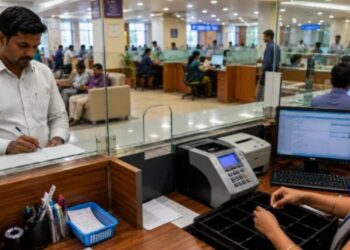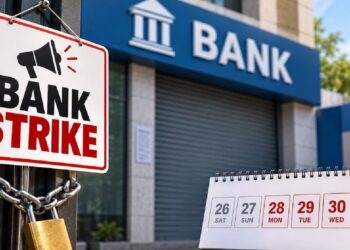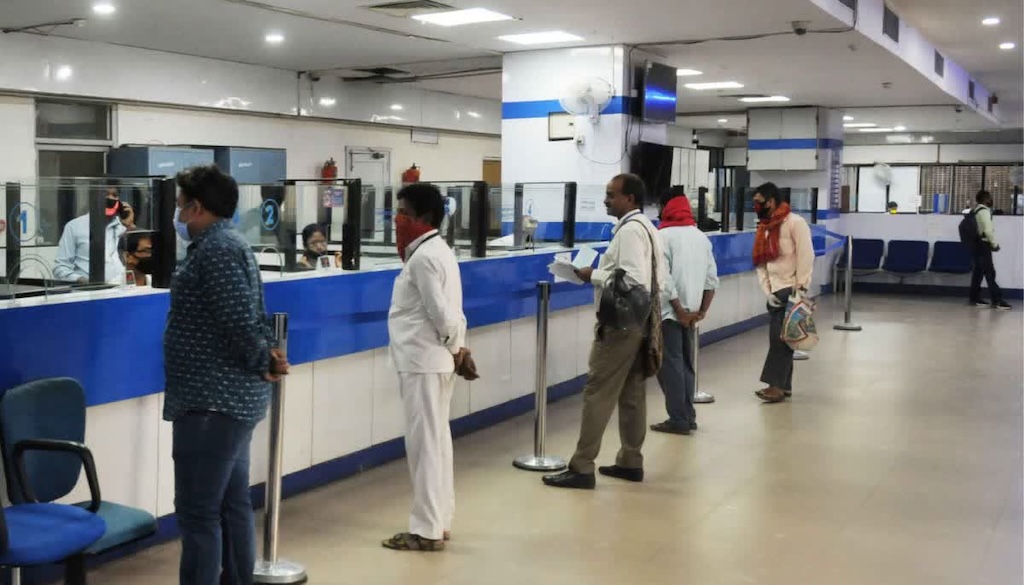
Patna: Public sector banks across the country were paralysed on January 27 after bank employees went on a nationwide strike, pressing for the long-pending demand of a five-day work week. The strike, called by the United Forum of Bank Unions, disrupted routine banking services including cash deposits and withdrawals, cheque clearance and issuance of drafts.

The UFBU, a joint platform representing nine major bank unions, is demanding that all Saturdays be declared bank holidays. Union leaders said that while an agreement in principle on the issue was reached during wage settlement talks with the Indian Banks Association in March 2024, the government has yet to issue a formal notification.
They have argued that a five-day work week is already followed by institutions such as the Reserve Bank of India, the Life Insurance Corporation of India and central government offices, making the continued six-day schedule for banks unjustified.

The strike has proved particularly inconvenient for customers as it comes after three consecutive holidays — January 24 (fourth Saturday), January 25 (Sunday) and January 26 (Republic Day). As a result, branch-level banking services have remained unavailable for four straight days.
Major public sector lenders, including State Bank of India, Punjab National Bank, Bank of Baroda and Canara Bank, were affected by the strike. Several of these banks had issued prior advisories to customers warning of possible service disruptions.
Private sector banks, however, continued to function normally, as their employees are not part of the striking unions. Lenders such as HDFC Bank, ICICI Bank and Axis Bank reported no major impact on operations.
Customers were advised to rely on digital channels for essential transactions. Net banking, mobile banking and UPI services remained operational throughout the strike, while ATMs were functional in most areas, though cash availability could vary by location. Banks have urged customers to check official websites or contact local branches for updates as the situation evolves.