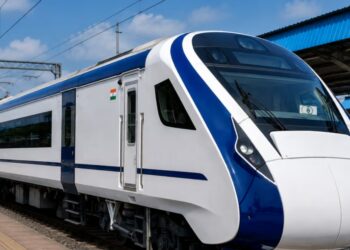

Patna: Indian Railways, under the directives of the Railway Board, is preparing a revised timetable for several premium and high-speed services passing through Patna Junction. The move is aimed at improving operational efficiency and reducing delays affecting ordinary Mail and Express trains across the Danapur Division.

The proposed restructuring focuses on ensuring better coordination between fast-moving VIP trains and regular passenger services on the busy Delhi–Howrah route.
Proposed Timetable Restructuring

The new plan includes services such as Vande Bharat, Namo Bharat, Duronto, Sampurna Kranti, Tejas, and Rajdhani trains. According to preliminary proposals, these trains may be scheduled at intervals of five to ten minutes to ensure smoother movement along high-traffic corridors.
A detailed list of all affected trains has been requested from the Danapur Division to finalise the revised timetable.
Rationale Behind the Change
Officials indicated that the current scheduling pattern often leads to congestion on key routes passing through Bihar. Reports suggest that every third Mail or Express train on the Delhi–Howrah section experiences delays ranging from 45 minutes to one hour.
In some cases, delays have been reported to extend up to two to three hours, particularly during peak traffic conditions.
The proposed changes aim to prioritise punctuality and reduce cascading delays across the network.
Expected Impact on Train Operations
Railway officials stated that once implemented, the revised scheduling system could reduce delays for ordinary trains to around 10 minutes. The Railways also expects improved line clearance and smoother coordination between different categories of services.
Trains operating at speeds between 130 km/h and 160 km/h are expected to be systematically spaced to avoid operational overlap and bottlenecks.
Coordination and Next Steps
The final timetable is being prepared based on inputs from the Danapur Division and directives issued by the Indian Railways. Authorities are currently compiling operational data and train lists before formal implementation.
Once finalised, the revised schedule is expected to be rolled out in phases to ensure minimal disruption to existing services.