Patna: More than 60 young people from across Bihar convened in Patna on Tuesday to deliberate on climate challenges and propose local solutions, as part of the Local Conference of Youth (LCOY) India 2025.

Organised by the Indian Youth Climate Network (IYCN) with UNICEF Bihar, the Sattvic Soul Foundation and local partner Eco Warrior, the consultation was hosted at the Chandragupt Institute of Management, Patna (CIMP). It marked one of several city-level dialogues feeding into India’s National Youth Statement (NYS), which will shape the country’s youth positioning at COP30 in Brazil later this year.
The Patna consultation gave participants—ranging from school and college students to NCC and NSS cadets, climate volunteers and NGO representatives—a platform to raise region-specific concerns. Bihar’s vulnerabilities to recurring floods, agricultural stress and waste management took centre stage, framed through five key themes: flood resilience, water resources, sustainable agriculture, waste management and youth-led innovation.

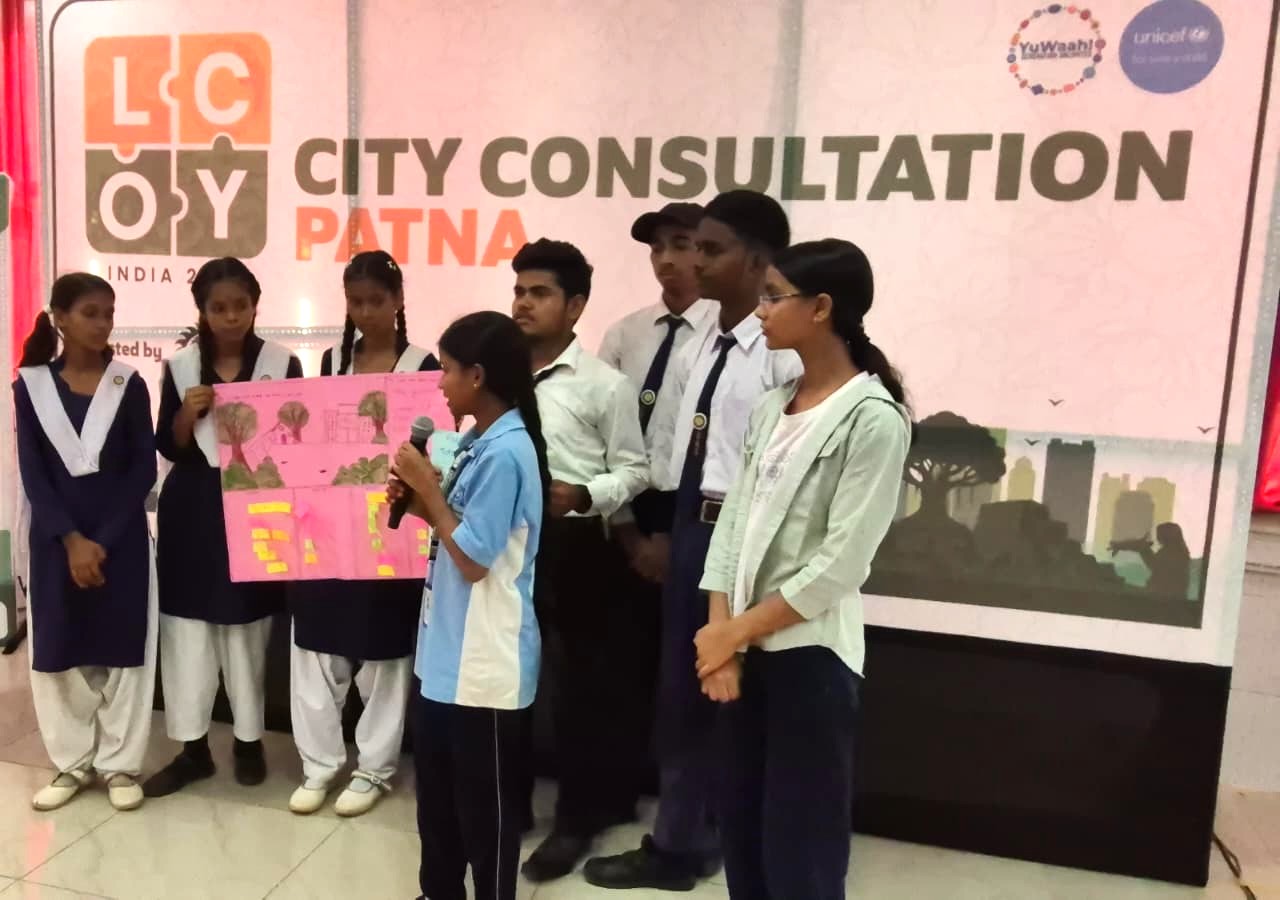
In breakout sessions, participants debated causes and solutions. Nisha Kumari, a Class X student from Government Boys Senior Secondary School, pointed to blocked drainage systems as a major factor worsening urban flooding. Sudhanshu Ranjan, an NCC cadet from BLP College, highlighted the need to protect biodiversity by providing food, shelter and water for animals during extreme conditions.
Officials and experts added perspective. Dr Abhishek Kumar, technical expert in the state’s environment department, said Bihar is targeting 20% green cover by 2028 with five crore saplings to be planted this year, while also safeguarding its three Ramsar-recognised wetlands. Margaret Gwada, UNICEF Bihar’s field office chief, called the state “among the most climate-vulnerable in India” and urged young people to spearhead climate resilience.
CIMP director Prof Rana Singh stressed that innovation—from artificial intelligence to sustainable agriculture—can be youth-led, while Dr Shashidhar Jha, expert for Bihar’s Net Zero Strategy, pressed the urgency of clean energy adoption alongside flood and waste management.
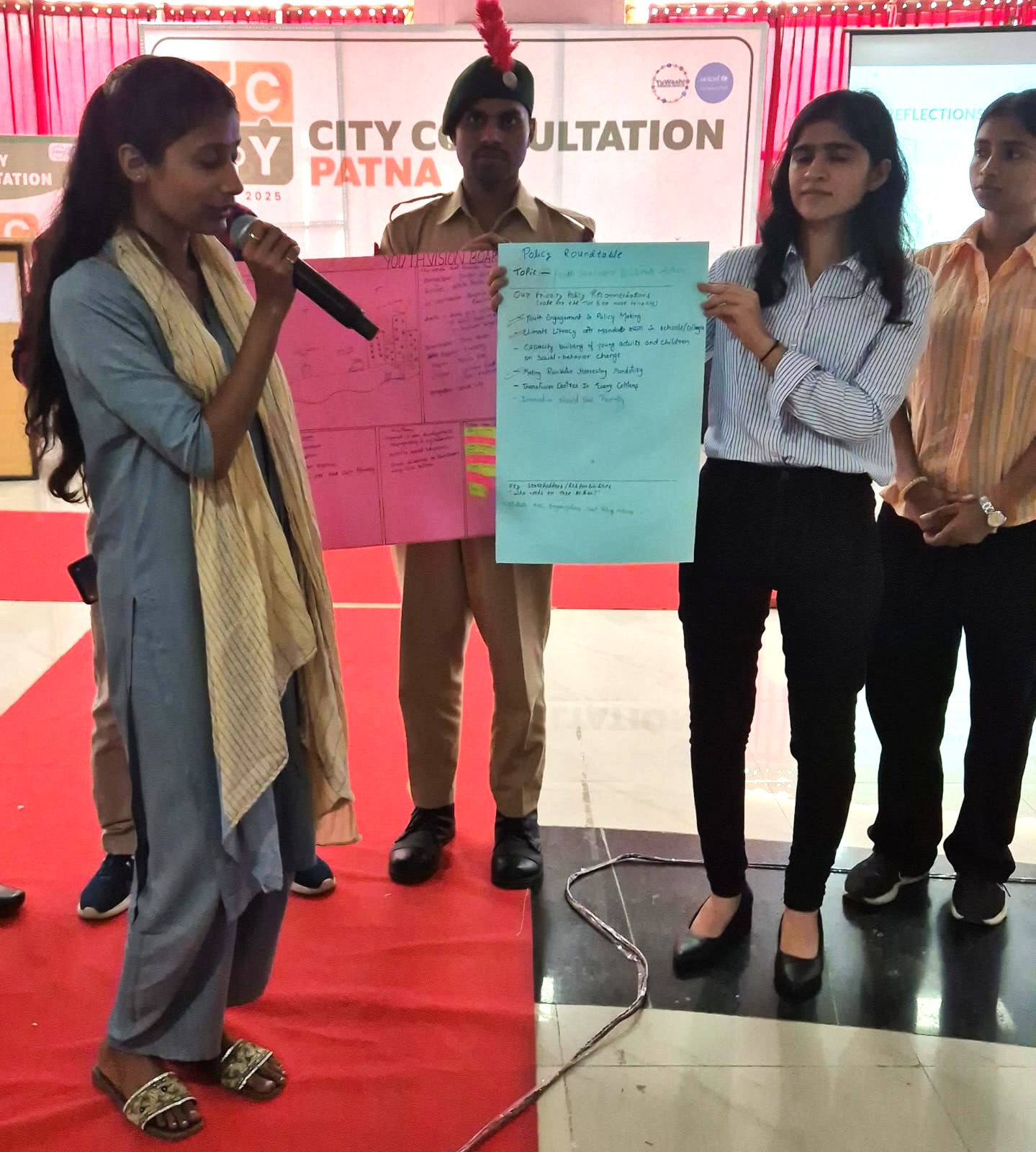
The day concluded with a policy roundtable where participants drafted and voted on climate recommendations for Patna, followed by a “Youth Vision Board” imagining the city as sustainable and inclusive.
City consultations under LCOY India 2025, affiliated with YOUNGO—the UNFCCC’s official youth constituency—are also being held in Mumbai, Hyderabad, Jaipur and Guwahati. Their outcomes will be consolidated into India’s National Youth Statement, feeding into the Global Youth Statement and youth advocacy at COP30.