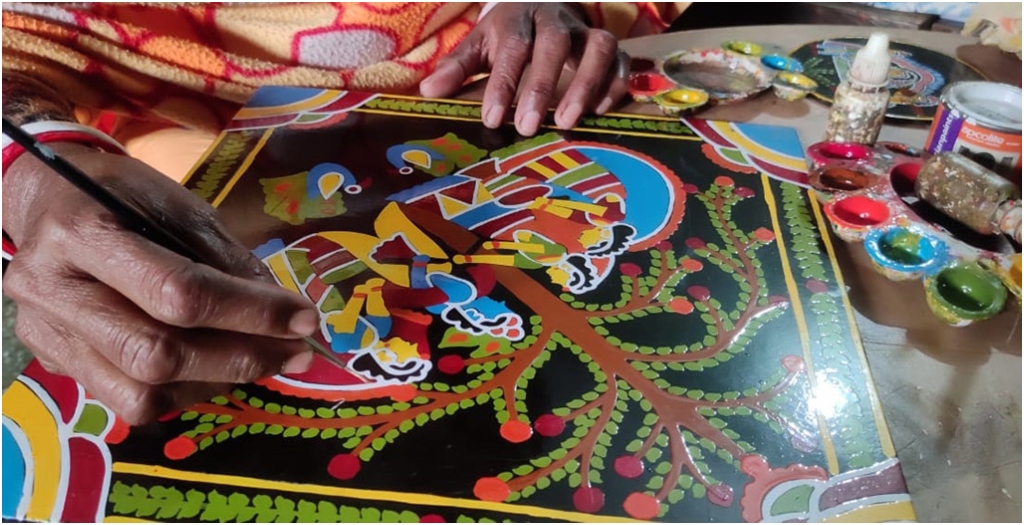
Patna: Bihar’s famous folk art, Tikuli painting, is on the verge of gaining global recognition. The Bihar Museum Society has formally applied for a Geographical Indication (GI) tag, which would officially identify the craft as unique to the region. So far, two queries regarding the application have been received and successfully answered with all necessary documents. Experts hope the GI tag will be granted by March 2026, bringing international attention to this centuries-old art form.

The GI tag is expected to benefit thousands of artisans and their families. It will help provide permanent employment and ensure that artists are paid fairly for their work. The recognition will also increase the popularity and demand for Tikuli painting both within India and around the world. Moreover, it will help preserve the originality of this traditional craft, preventing imitation and supporting the cultural heritage of Bihar.
Tikuli painting has a long and fascinating history. It started as a way for bindi-making artists to earn more income and has roots going back to the Mauryan period. During the Mughal era, Patna city became a major centre for the craft. The modern form of Tikuli painting, as we see it today, developed after 1950 when new techniques and materials were introduced, creating a wider market for the art. Today, Tikuli is mainly done on MDF boards, making it more durable and versatile.

Renowned artist Ashok Kumar Vishwas, a Padma Shri awardee, notes that the art underwent a major transformation after his visit to Japan in 1954. Over time, it shifted from being painted on glass to wood, hardboard, and then MDF boards. These changes have allowed Tikuli painting to grow in style and reach, attracting both local and international art lovers. With the GI tag, Bihar’s Tikuli painting is now ready to step onto the global stage, giving pride and livelihood to thousands of artisan families.