Bhagalpur: A major consultation in Bhagalpur has brought renewed attention to Bihar’s medicinal plant sector, with experts and officials saying the state could create thousands of livelihood opportunities by building stronger markets around biological resources. The workshop, organised by Chandragupt Institute of Management Patna (CIMP) in collaboration with Bihar State Biodiversity Board, focused on trade, value addition and marketing of medicinal plants, an area that remains largely untapped despite Bihar’s rich biodiversity and traditional herbal knowledge.

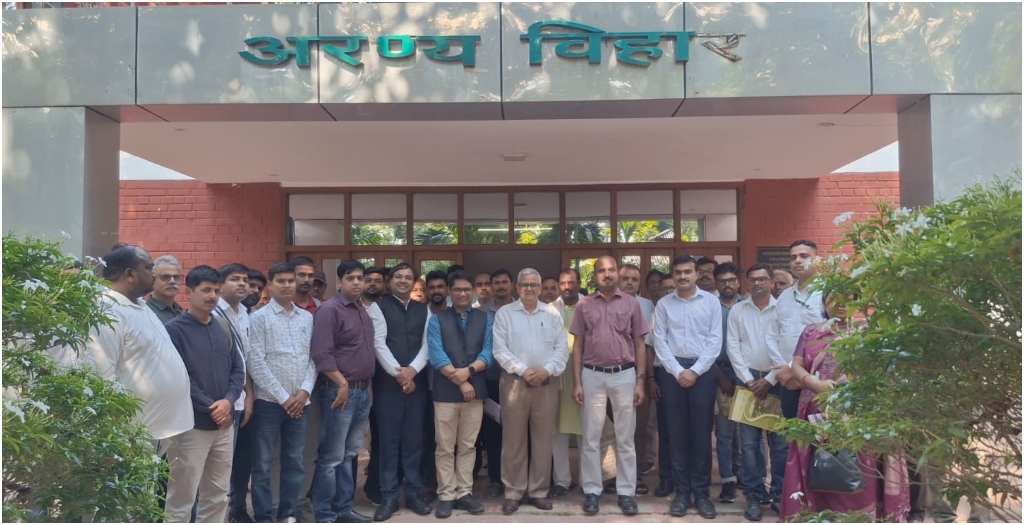
The event was held at the District Forest Office campus as part of a state-backed study on the harvesting, collection and trade of biological resources in Bihar. The consultation brought together a wide group of participants, including forest officials, agricultural scientists, biodiversity management committees, farmers, traders, traditional Vaidya practitioners and civil society representatives. Discussions centred on how Bihar can move beyond raw collection of medicinal plants and develop a more organised system that allows local communities to earn better incomes through processing, packaging and formal trade.
Officials said Bihar has significant potential to become a major hub for medicinal plant cultivation if institutional support improves. Hemkant Roy said biodiversity conservation should go hand in hand with livelihood generation, adding that farmers and traders need to be brought into formal networks to access state support. He urged entrepreneurs working with medicinal plants to register with the biodiversity board so they can benefit from official recognition and stronger market access. Ashutosh Raj said the forest department was committed to promoting sustainable harvesting and helping biodiversity-based enterprises grow across the region.

Researchers from Bihar Agricultural University in Sabour said farmers can benefit from scientific cultivation methods and improved planting materials. They stressed that medicinal crops could become a profitable alternative for rural households if backed by technical training and direct institutional support. The workshop also heard from Jeta Singh, who said medicinal plants should be recognised not only as a source of income but also as part of a broader health and wellness system. He proposed setting up a dedicated mandi in Bhagalpur for medicinal produce, which participants said could create a direct trading platform for growers and small businesses.
During the technical session, CIMP researchers presented findings from their ongoing study and pointed to serious gaps in Bihar’s medicinal plant value chain. These included weak branding, poor packaging, limited certification facilities, lack of testing centres and fragmented coordination between government departments. Farmers and traditional practitioners said many producers still rely on informal markets, where low awareness and lack of institutional backing often reduce earnings. Experts argued that stronger links between the forest department, agriculture institutions, universities and AYUSH bodies are essential if Bihar wants to create a sustainable medicinal plant industry.
The workshop ended with the distribution of business licences to two local entrepreneurs from Pirpainti, who will now be able to undertake medicinal plant-based trade and value-added business activities under formal approval. Officials described the move as an important step towards creating a regulated and professional market for medicinal resources in Bihar. The consultation made clear that while the state has abundant biological wealth, turning it into economic growth will depend on how quickly institutions can support farmers, create market infrastructure and build trust in Bihar’s medicinal products across the country.