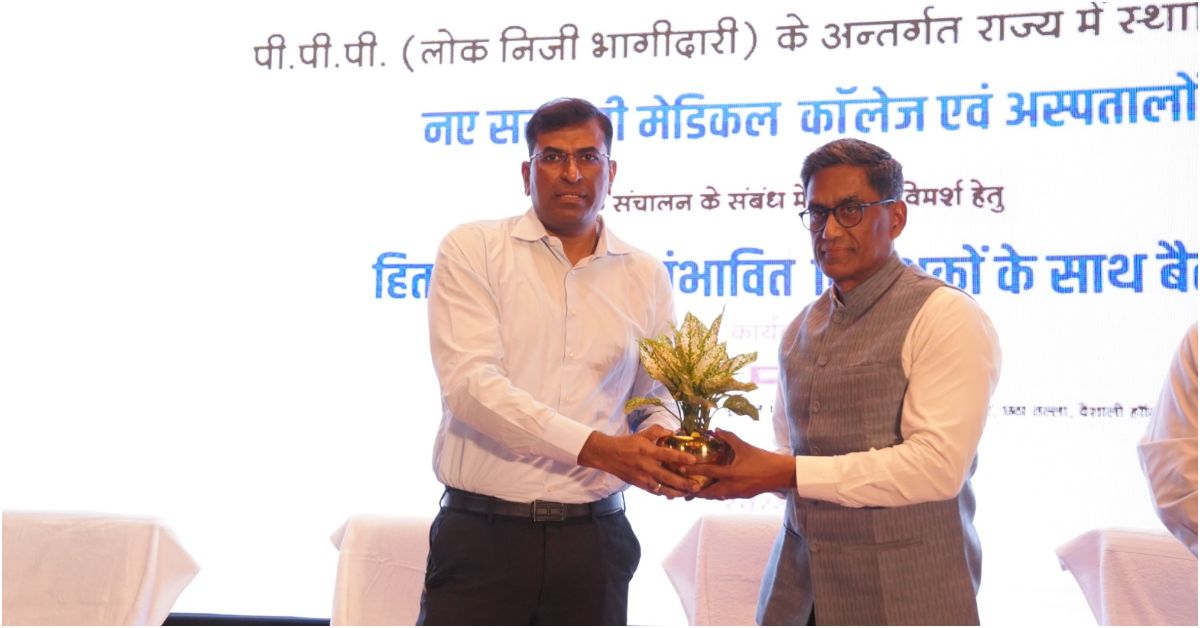
Patna: The Bihar government has stepped up efforts to expand healthcare infrastructure and medical education through public-private partnerships, as senior officials and investors met in Patna on Wednesday to discuss the operational framework for new medical colleges and hospitals.

The meeting, organised by the Health Department, Bihar, focused on developing government medical institutions under a structured PPP model aimed at improving accessibility, infrastructure quality and investment participation in the sector.
Investor Engagement and Sector Outlook

More than 80 participants, including investors, healthcare institutions and experts from Bihar and other states such as Punjab, Chhattisgarh, Maharashtra, Haryana, Gujarat, Kerala and Uttar Pradesh, took part in the discussions. Stakeholders expressed interest in the proposed model and highlighted its potential for expanding medical education capacity.
Government’s Policy Push
Chief Secretary Pratyaya Amrit, addressing the meeting as chief guest, said the state’s priority is to ensure affordable, modern and accessible healthcare services. He stated that the government is building a supportive ecosystem for investment through improved infrastructure, ease of doing business and single-window clearance mechanisms.
He added that the initiative is intended to bring “new momentum” to the functioning of medical colleges and hospitals through collaborative development with private partners.
State Health Society Secretary Kumar Ravi said the proposal includes 17 greenfield and 16 brownfield medical colleges and hospitals across districts. He noted that land allocation of 20 to 25 acres per district is being planned for new institutions, along with transparent tender-based selection and appointment of a transaction advisor for implementation support.
PPP Framework and Implementation
Officials from the Bihar Medical Services and Infrastructure Corporation Limited said stakeholder feedback has been invited to refine the project structure. The process, they said, will focus on transparency, quality assurance and structured execution under government oversight.
The proposals aim to strengthen both medical education capacity and healthcare delivery systems in the state.
Stakeholder Response
Participants from multiple states welcomed the initiative, stating it could generate employment opportunities and expand access to quality medical education. Representatives from Kerala and other regions said the model could significantly improve healthcare infrastructure and service delivery standards.