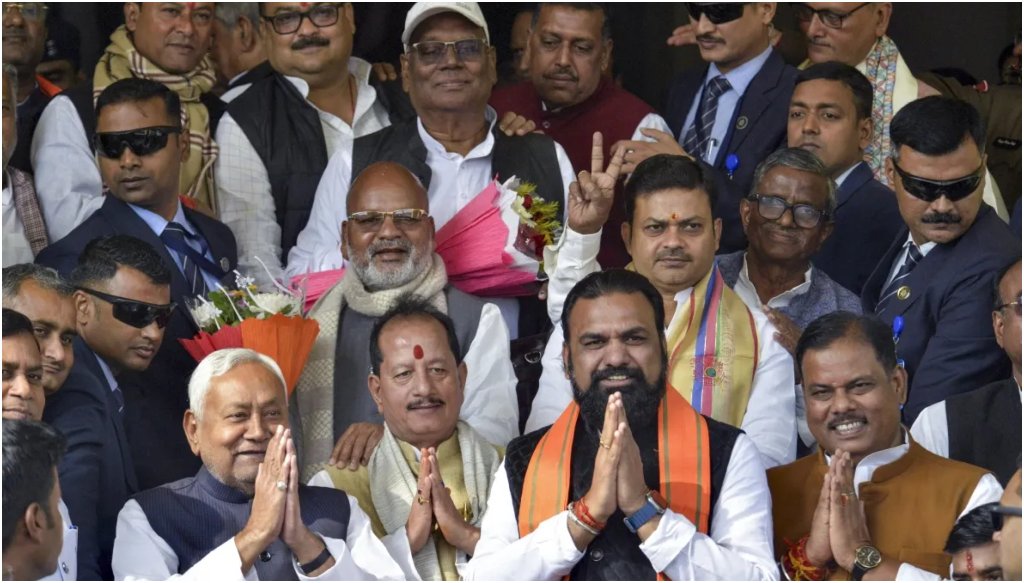
Patna: The swearing-in ceremony of the newly elected Bihar Assembly has highlighted a changing political landscape, marked by a blend of legacy leadership, growing female participation, and the emergence of a younger generation aiming to reshape policy priorities.

The event showcased an unusual but telling scene: multiple members from the same political families taking oath—wives, sons, daughters-in-law, and sisters-in-law of prominent leaders—illustrating the persistence of political dynasties while also signalling a shift in public expectations and participation.
The entry of the spouses of Rajvallabh Yadav, Bindi Yadav, Bootan Singh, Upendra Kushwaha, and Ashok Mahto reflects a broader trend of women stepping beyond supportive roles to hold elected office themselves. Many secured their mandates through sustained grassroots involvement, constituency-level accessibility, and long-established community ties—an indication that their roles extend beyond symbolism and into substantive leadership.

Simultaneously, the arrival of second-generation politicians—among them the sons of Shahabuddin, Prabhunath Singh, Anand Mohan, Arun Kumar, Jagdish Sharma, Lalu Prasad, and Shakuni Chaudhary—suggests an electorate willing to invest in youth. Their campaigns, centred on development, education, technology, and employment, highlight a shift towards more modern political priorities.
One of the most discussed moments of the ceremony was the oath-taking of both the mother-in-law and daughter-in-law of former Chief Minister Jitan Ram Manjhi. Their simultaneous presence underscoreed a widening of political representation across social groups and reinforced themes of social justice and Dalit leadership.
Collectively, the incoming Assembly marks a nuanced transition: heritage politics remains deeply rooted in Bihar, yet the rise of women, young leaders, and broader social representation is beginning to redefine the nature of political power in the state. As the new House begins its legislative tenure, expectations are set for a more diverse, responsive, and contemporary approach to policymaking.