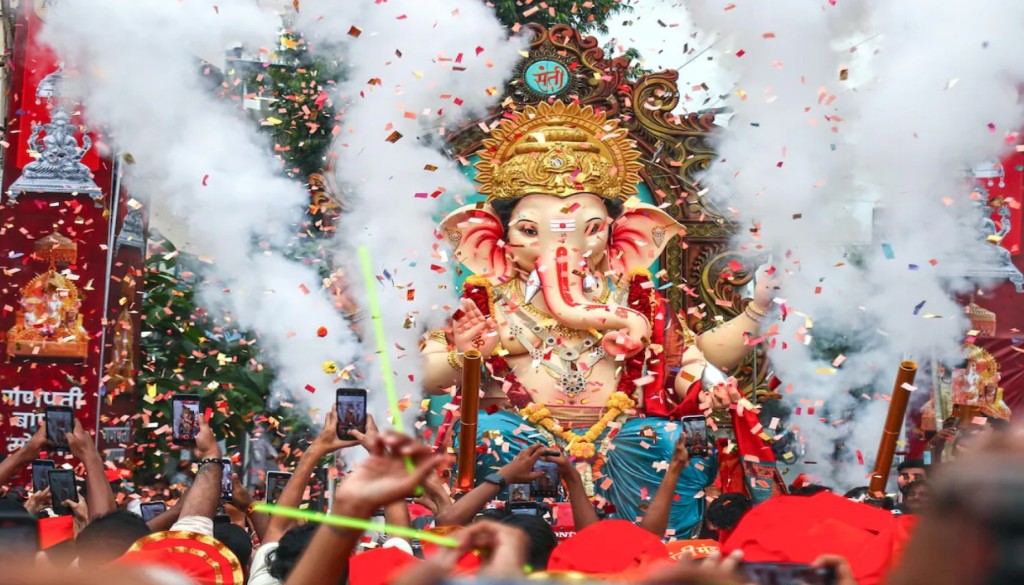
Patna: Ganesh Chaturthi, one of India’s most widely celebrated festivals, celebrated on August 27 this year. Observed as the birthday of Lord Ganesha, the deity of wisdom, prosperity, and good fortune, the festival spans ten days, culminating in Ganesh Visarjan, the immersion of the idol, on 7 September. Devotees across the country, particularly in Maharashtra, prepare for the festival with elaborate rituals, prayers, and traditional offerings.

According to the Panchang, the auspicious period for Ganesh Chaturthi begins at 1:54 pm on 26 August and lasts until 3:44 pm on 27 August, with the ideal time for installing the idol falling on 27 August itself. Observing certain customs is considered essential to ensure the full spiritual benefits of the worship.
Key Rituals and Guidelines for Worship

Devotees are advised to select an idol with its trunk curved to the left, considered particularly auspicious. Right-curved idols represent the Siddhivinayak form, which requires stricter worship standards. The installation should be preceded by thorough cleaning of the worship space and sprinkling of Gangajal. The idol should be placed on a raised pedestal or mat, preferably over a red or yellow cloth, and oriented towards the north-east.
Scriptures recommend the use of clay idols for their auspicious significance. The idol should be installed during the Chaturthi Tithi, avoiding night-time installation, and should not be overly large, making immersion manageable. After placement, devotees perform Abhishek (ritual anointing) and recite the Pran Pratishtha mantra to symbolically infuse life into the idol. Offerings of vermilion, durva grass, and traditional sweets are customary, with modaks – sweet dumplings made from coconut and jaggery – regarded as Lord Ganesha’s favourite.
Devotees often observe fasting, either abstaining from food and water or consuming only fruits, while women in particular pray for family prosperity and the long life of their children. Daily rituals include chanting mantras, performing aarti, and offering bhog to the deity throughout the ten days.
Culinary Traditions
The festival is not only a religious observance but also a celebration of Maharashtra’s culinary heritage. Traditional dishes prepared during Ganesh Chaturthi include:
- Modak: Steamed sweet dumplings with a coconut and jaggery filling, considered the deity’s favourite. Modern variations include chocolate, saffron, and dry fruit flavors.
- Puran Poli: A sweet flatbread stuffed with gram dal, jaggery, and cardamom, served hot with ghee.
- Shrikhand: Creamy, saffron- and cardamom-flavoured hung curd dessert, typically served with puri.
- Sabudana Khichdi: A popular fasting dish made from sago, potatoes, peanuts, and mild spices.
- Rava Sheera (Semolina Halwa): A sweet pudding made with semolina, ghee, milk, and sugar, often garnished with saffron and cardamom.
- Karanji: A crispy, half-moon shaped sweet filled with coconut and jaggery, similar to North India’s gujiya but distinct in texture and taste.