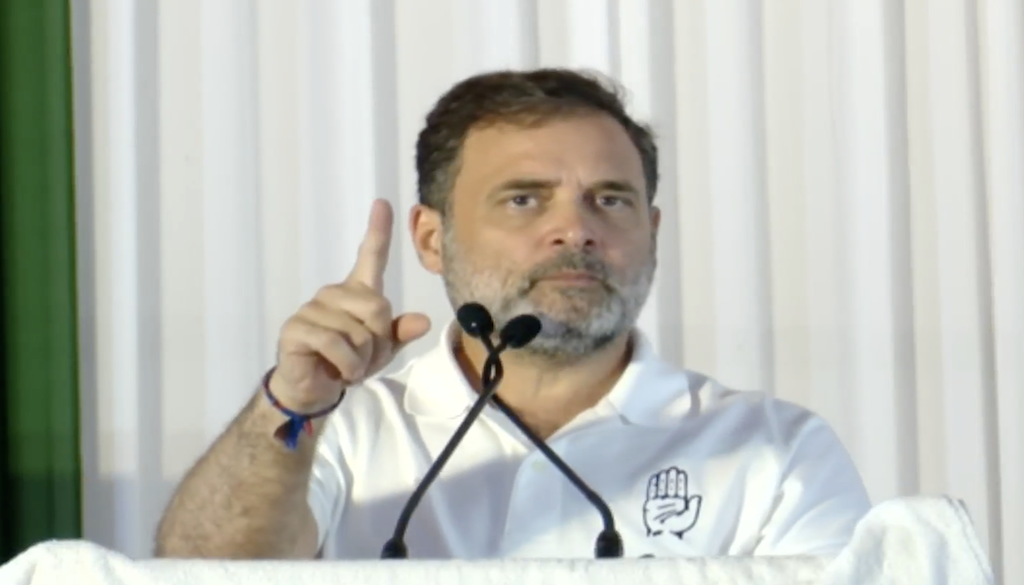
Patna: Congress leader Rahul Gandhi is set to visit Patna on July 15 to address a student conference, marking his first visit to Bihar since the 2025 Assembly elections that significantly altered the state’s political landscape.

The visit comes at a crucial time for the Congress, which is attempting to rebuild its organisation and regain political relevance after a disappointing electoral performance. Party leaders see the programme as the beginning of a renewed outreach campaign, but Rahul Gandhi’s mission faces several political and organisational hurdles.
1. Rebuilding Congress’ Shrinking Support Base
The Congress remains the largest national party in the Opposition INDIA bloc, but its electoral footprint in Bihar has steadily declined.

The party’s strength in the Assembly has fallen from 27 MLAs in 2015 to 19 in 2020 and just six after the 2025 Assembly elections. Even senior state leaders, including Bihar Congress president Rajesh Ram and Congress Legislature Party leader Dr Shakil Ahmad Khan, were defeated in the elections.
The setback was further highlighted during the Rajya Sabha election, where the Opposition candidate reportedly lost after three Congress MLAs did not cast their votes.
Political observers believe Rahul Gandhi’s immediate challenge will be to revive the party’s grassroots presence and prepare well in advance for future elections rather than limiting organisational activity to election seasons.
2. Tackling Internal Factionalism
Another major challenge before Rahul Gandhi is addressing divisions within the Bihar Congress.
Differences between state Congress president Rajesh Ram and former state unit chief Akhilesh Prasad Singh have become increasingly visible. Akhilesh Prasad Singh has also publicly criticised Bihar Congress in-charge Krishna Allavaru and expressed dissatisfaction with senior party leaders.
At a recent event in Delhi, Akhilesh Prasad Singh blamed the leadership changes in Bihar for the party’s poor electoral performance and questioned the appointment of leaders without political experience.
His remarks drew a sharp response from Dr Shakil Ahmad Khan, who questioned Akhilesh Prasad Singh’s own electoral record and defended the party’s inclusive approach.
Rahul Gandhi has consistently advocated greater representation for Other Backward Classes (OBCs) within the Congress organisation and candidate selection process, making internal unity a key test for the party leadership.
3. Countering Chief Minister Samrat Choudhary’s Aggressive Politics
Bihar’s political equations have changed significantly since the Assembly elections.
With Chief Minister Samrat Choudhary leading the BJP government, the Congress faces a more assertive political opponent than before. Earlier, the party had hoped for shifting alliances under former Chief Minister Nitish Kumar, but the political landscape has changed after his move to the Rajya Sabha.
Rahul Gandhi is expected to sharpen the Congress’ political strategy to counter the BJP government’s aggressive positioning on governance and law-and-order issues.
4. Defining Congress’ Relationship with RJD
The Congress also faces questions over its future alliance strategy with the Rashtriya Janata Dal (RJD).
Several leaders within the Bihar Congress have argued that the party should strengthen itself independently rather than remain politically dependent on the RJD. They believe the alliance has contributed to the Congress’ declining influence in the state.
During the 2025 Assembly elections, the Congress asserted itself more strongly in seat-sharing negotiations, although some leaders believe delays in projecting Tejashwi Yadav as the chief ministerial face affected the Opposition’s campaign.
Rahul Gandhi will now have to decide whether the Congress should continue its existing alliance strategy or focus on rebuilding independently before the next Assembly election.
5. Leveraging Pappu Yadav’s Political Influence
Another important challenge is determining the political role of MP Pappu Yadav within the Congress.
Despite reservations from sections of the RJD leadership, Pappu Yadav joined the Congress before the elections after merging his Jan Adhikar Party (JAP) with the national party.
His independent victory from Purnea after a dispute over seat allocation demonstrated his political influence, and many within the Congress view him as an asset capable of expanding the party’s reach.
However, Pappu Yadav’s political rivalry with RJD leader Tejashwi Yadav complicates the Congress’ alliance dynamics. Rahul Gandhi will have to balance the interests of both leaders while deciding how prominently to position Pappu Yadav in Bihar politics.
A Crucial Political Test
Rahul Gandhi’s July 15 visit is expected to serve as more than just a student outreach programme. It will be closely watched as an indicator of the Congress leadership’s roadmap for Bihar following its disappointing Assembly election performance.
Whether the party can overcome organisational weaknesses, internal divisions and alliance challenges will largely determine its prospects ahead of future electoral contests in the state.