New Delhi/Patna: A major political realignment at the Centre has emerged after 20 rebel Lok Sabha MPs from the All India Trinamool Congress announced their merger with the Nationalist Citizens Party of India (NCPI) and extended support to the BJP-led National Democratic Alliance (NDA).

The development is expected to significantly alter the balance of power within the ruling coalition, reducing the leverage previously enjoyed by key allies such as the Janata Dal (United) and the Telugu Desam Party.
According to statements made by the dissident MPs, the group, led by MP Kakoli Ghosh Dastidar, has informed Lok Sabha Speaker Om Birla that it represents more than two-thirds of the TMC’s parliamentary strength and has sought recognition as a separate bloc in Parliament. The MPs said they would work with the NDA under the leadership of Prime Minister Narendra Modi.

The TMC leadership has challenged the move and questioned its legal validity, arguing that individual legislators cannot merge with another party unless the parent political party itself approves such a merger. Senior advocate and Rajya Sabha MP Kapil Sibal has also raised concerns over the anti-defection implications of the development.
Changing Numbers in the Lok Sabha
In the 2024 Lok Sabha elections, the BJP secured 240 seats, falling 32 short of the majority mark of 272 in the 543-member House.
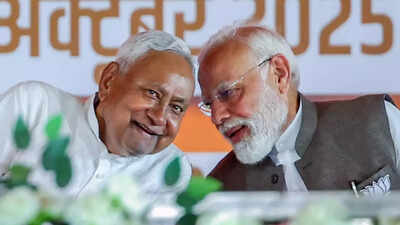
Before the latest development, the NDA government depended significantly on the support of key allies, including the JD(U), led by former Bihar Chief Minister Nitish Kumar, and the TDP, headed by Andhra Pradesh Chief Minister N. Chandrababu Naidu.
With the support of alliance partners, the NDA’s strength had risen to 282 members. The addition of 20 former TMC MPs now takes the coalition’s tally to 312, according to available parliamentary arithmetic.
Political observers say the new numbers mean that even if either the JD(U), the TDP, or both were to withdraw support, the NDA government would still remain above the majority threshold.
Impact on JD(U) and Nitish Kumar
Analysts believe the shift could reduce the influence of the JD(U) within the NDA, particularly in policy negotiations and Cabinet discussions.
Until now, JD(U)’s parliamentary numbers had enabled the party to exert influence on issues such as the Uniform Civil Code and the “One Nation, One Election” proposal. With an expanded support base, the BJP may no longer need to rely as heavily on JD(U)’s backing for key legislation.
The development could also affect future Cabinet expansion plans. JD(U) currently holds two ministerial positions in the Union Cabinet, represented by Rajiv Ranjan Singh, popularly known as Lalan Singh, and Ram Nath Thakur.
Political analysts suggest that demands for additional Cabinet berths from JD(U) may now carry less weight, particularly if the newly formed NCPI bloc seeks representation in the government.
Implications for Bihar Politics
The new political arithmetic could also influence Bihar’s internal NDA dynamics.
Following Nitish Kumar’s resignation as Chief Minister in April 2026, Bihar is now led by Chief Minister Samrat Choudhary. Despite stepping down, Nitish Kumar has continued to wield influence within the alliance due to JD(U)’s importance at the Centre.
With the BJP’s dependence on JD(U) reduced, political observers believe the party may gain greater autonomy in decision-making, both in the state government and in future seat-sharing negotiations.
The BJP may also adopt a stronger position during upcoming Assembly and Lok Sabha elections, potentially reshaping the long-standing power balance between the two allies.
Meanwhile, the fallout from the rebellion poses a significant challenge for TMC chief and West Bengal Chief Minister Mamata Banerjee, as the party faces one of its biggest internal crises in recent years.