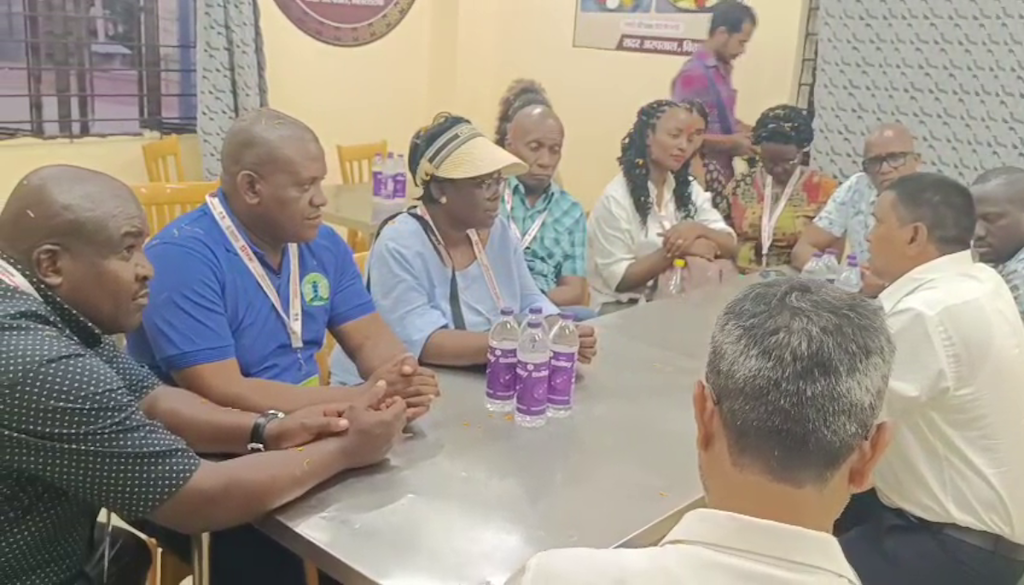
Nalanda/Patna: Chief minister Nitish Kumar’s flagship Sustainable Livelihood Scheme- JEEViKA has found admirers across continents, with a 17-member high-level delegation from Kenya visiting Nalanda this week to study the programme’s model of women’s empowerment and poverty alleviation.

The delegation, part of an ‘Immersion Learning and Exchange’ programme organised by Jeevika in partnership with BRAC International, met women beneficiaries in Rahui and Harnaut blocks. They observed how the initiative—launched in 2018—has enabled marginalised families, particularly those affected by prohibition, to achieve financial stability and social dignity.
Sanjay Paswan, deputy project manager of the scheme, said the Kenyan team was impressed by how beneficiaries, popularly called JEEViKA Didis, had moved from dependency to running enterprises and services. “The government has not only provided livelihoods but brought women into the mainstream of society with respect,” he said.

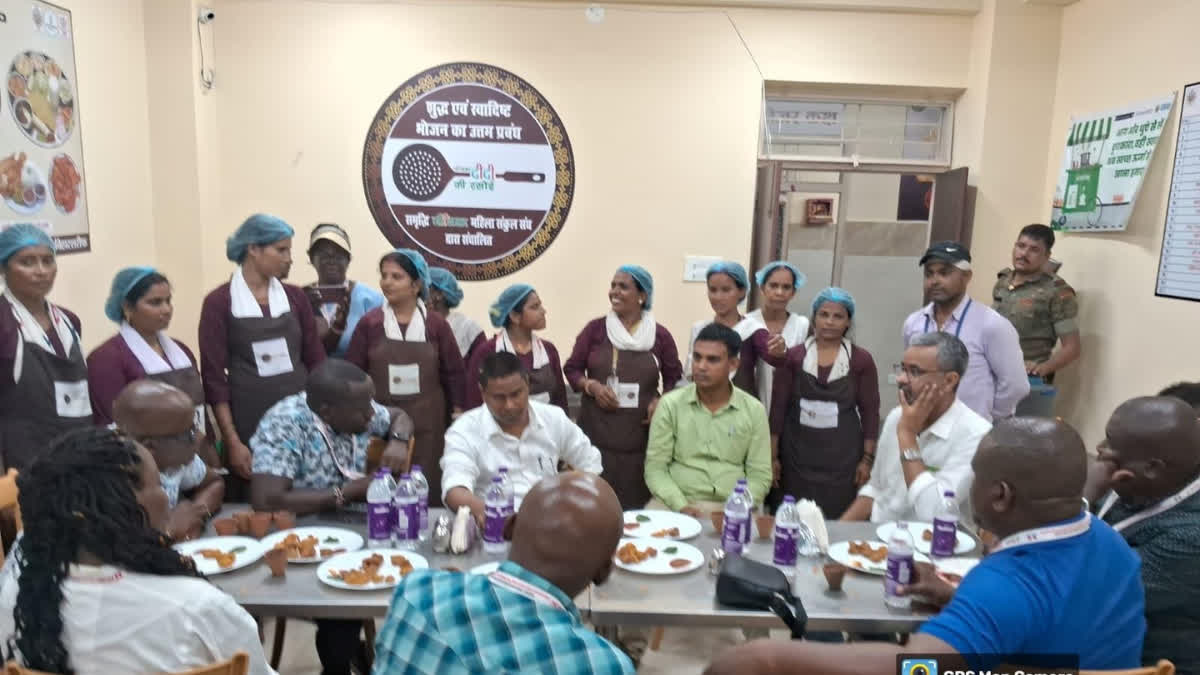
In Nalanda district alone, more than 3,67,000 women are associated with JEEViKA groups. Of them, 126 Didis are engaged in Jeevika’s community kitchens, 119 in sanitation work and 50 in sewing, while others manage pharmacies, drug distribution centres and help desks in hospitals. Salaries range from Rs 5,000 to Rs 10,000 a month, with increments linked to experience.
The scheme, operated through JEEViKA village organisations, offers financial assistance of up to Rs 2 lakh—an increase from the earlier cap of Rs 1 lakh—to support small enterprises. Beneficiaries run grocery shops, food stalls, tailoring units, beauty shops and fruit and vegetable businesses, among others.
For many, the transformation is deeply personal. “We were asked how we got involved in this work. We told them that after joining JEEViKA, we got training and today we are serving patients in hospitals by providing them food and moving forward,” said one Jeevika Didi.
The Kenyan delegation, which included Leo Okero, regional programme director at the Village Enterprise Institute, praised the model. “The biggest learning for us is how the Bihar government and its ministries are working together to end poverty. The smile on the faces of the JEEViKA Didis we met today is enough to tell the success story. It is not just the empowerment of women, but of the entire family—and that is the biggest change,” he said.
The visit has opened the possibility of Kenya adapting Bihar’s model to strengthen its own community-led programmes, extending the reach of an initiative that began in villages of Nalanda and now resonates beyond India’s borders.