Patna: On the fifth day of Shardiya Navratri, devotees across India celebrate and worship Maa Skandamata, the mother of Lord Skanda, also known as Kartikeya. She is revered as one of the nine forms of Goddess Durga and is described in scriptures as a symbol of motherly love and courage. Her name, Skandamata, literally translates to “mother of Skanda.” According to religious texts, her worship not only brings happiness and prosperity but also provides divine wisdom and good health.

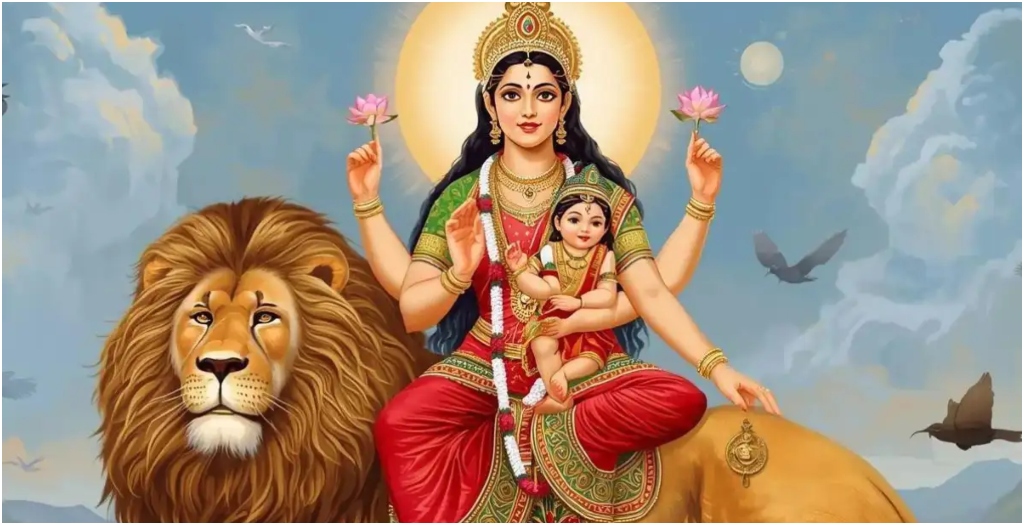
Maa Skandamata is depicted as a radiant, four-armed goddess seated on a lotus and riding a lion. In her lap sits the child form of Lord Kartikeya, who represents courage and leadership. With one hand she blesses her devotees in the Varada Mudra, and in two others, she holds blooming lotuses. Because of her lotus seat, she is also lovingly referred to as Padmasana Devi. Her white complexion symbolises purity and peace, making her worship an important moment of spiritual cleansing during Navratri.
The fifth day of Navratri is spiritually significant because it is believed that the devotee’s mind reaches the ‘Vishuddha Chakra’, or the throat chakra, leading to calmness of worldly desires and focus on higher consciousness. Worshipping Maa Skandamata is said to absorb the devotee’s mind in divine thoughts, paving the way for spiritual progress. Her blessings are believed to bring inner peace, remove obstacles, and guide devotees towards enlightenment.

Traditionally, devotees perform the Panchami puja with great devotion, offering kumkum, rice, flowers, fruits, sandalwood, and lighting a ghee lamp. Bananas are offered as a special prasad to Maa Durga on this day, symbolising fertility and growth. It is also considered auspicious to donate food to Brahmins, which is believed to sharpen intellect and support spiritual advancement. The mantra “Simhasanagata Nityam Padmashritakardvaya…” is chanted to seek the goddess’s blessings for health, happiness, and the well-being of children.
For devotees, Day 5 of Navratri is a reminder of the nurturing power of motherhood, strength in adversity, and the importance of spiritual purity. Maa Skandamata’s worship is seen as a path to both worldly happiness and divine radiance.