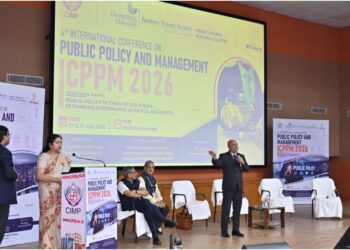
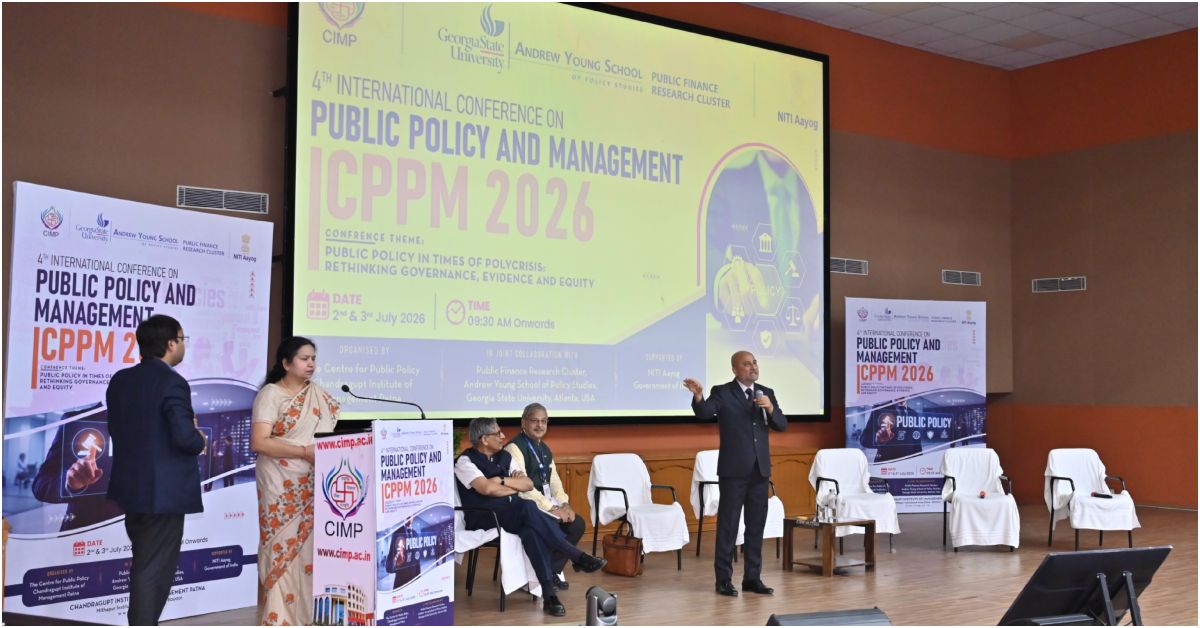
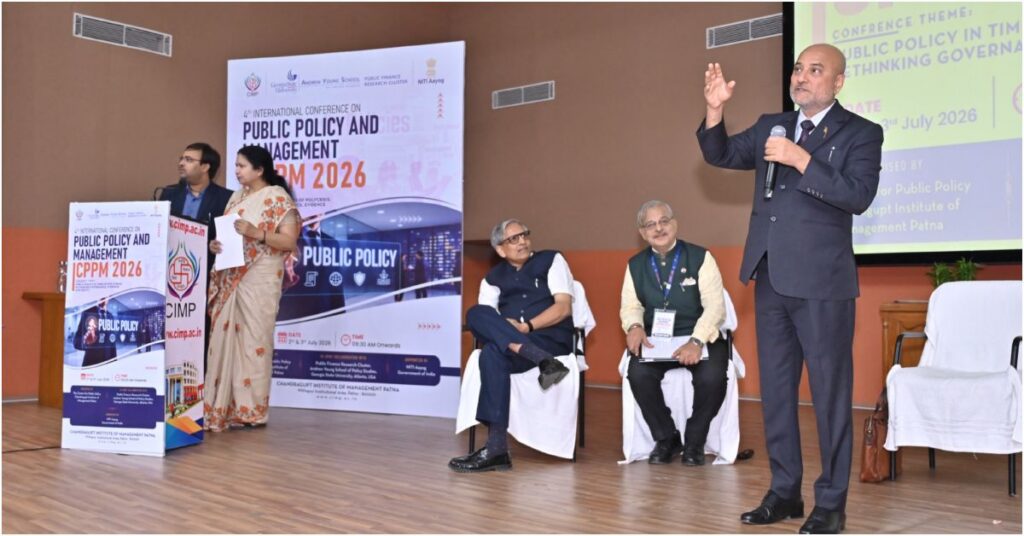
Patna: The 4th International Conference on Public Policy and Management (ICPPM–2026) concluded at the Chandragupt Institute of Management Patna (CIMP) on Friday after two days of discussions on the theme, “Public Policy in Times of Polycrisis: Rethinking Governance, Evidence and Equity.”

Organised by the Centre for Public Policy at CIMP in collaboration with the Public Finance Research Cluster at the Andrew Young School of Policy Studies, Georgia State University, United States, and supported by NITI Aayog, Government of India, the conference brought together policymakers, academicians, researchers and practitioners to examine contemporary governance challenges and policy responses.
Technical Sessions Highlight Governance and Sustainability

The second day featured three parallel technical sessions on decentralisation, local governance and state capacity; climate change, sustainability and policy resilience; and Viksit Bihar. A total of 17 research papers were presented by scholars representing leading academic and research institutions.
According to the organisers, the presentations focused on strengthening local governance, improving institutional capacity, building climate resilience and promoting inclusive, evidence-based policymaking. The sessions also encouraged discussions on practical approaches to addressing governance challenges.
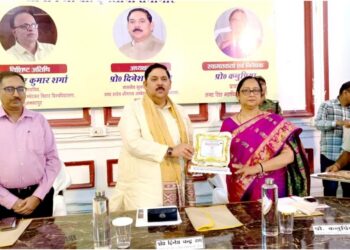
Biodiversity and Environmental Governance in Focus
A special session, organised jointly with the Bihar State Biodiversity Board (BSBB), examined the theme, “Environment Policy, Governance and Biodiversity Conservation: Institution, Society and Community.”
The session was chaired by Bharat Jyoti, Chairperson of BSBB, and featured a keynote address by Dr Jagmohan Sharma, former Director of the Indira Gandhi National Forest Academy (IGNFA), Dehradun.
In his address, Sharma said responding to the global polycrisis requires science-based, inclusive and environmentally responsible governance, with biodiversity conservation and climate resilience forming central pillars of sustainable development.
Discussions also highlighted the importance of integrating biodiversity conservation into governance through stronger institutions, community participation and sustainable management of natural resources.
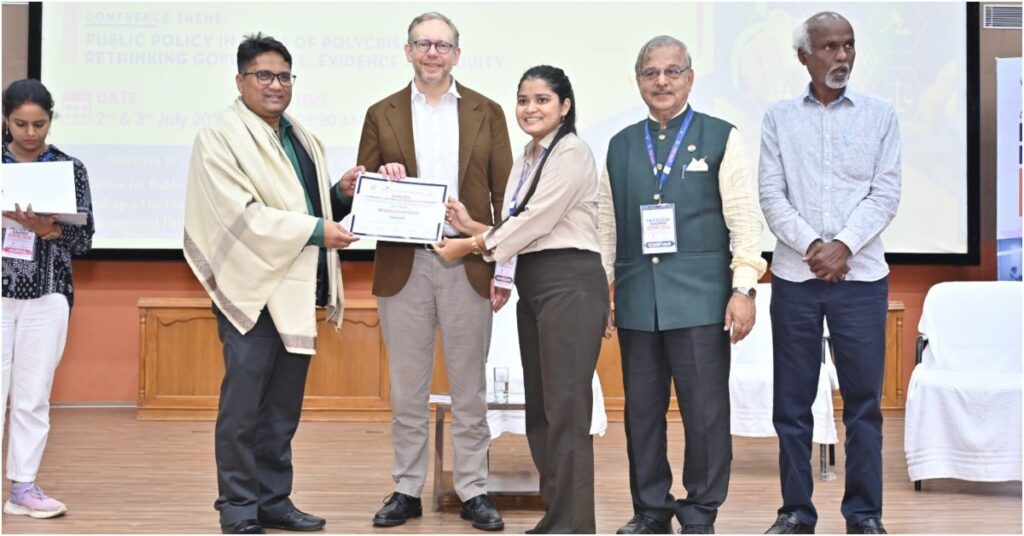
AI’s Role in Public Policy
The conference also included a special online address by Dr Vaibhav Chaudhary of the University of Campinas, Brazil, on the use of Artificial Intelligence in governance.
Chaudhary discussed how AI can support policy planning, improve governance efficiency and strengthen public service delivery. He also underlined the need for ethical and responsible adoption of AI in public administration.
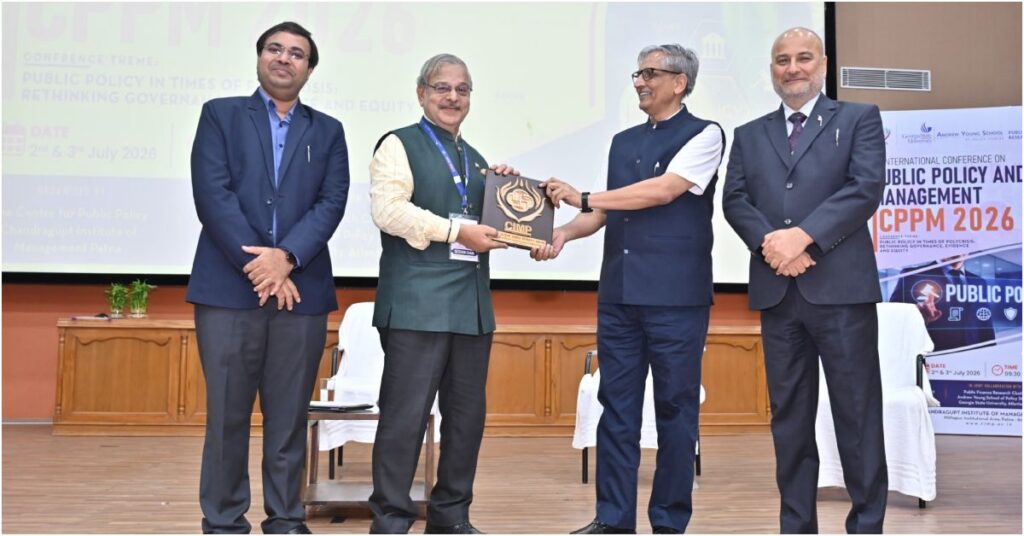
Call for Collaborative Policymaking
The valedictory session was addressed by Utsav Kumar Singh, Research Affiliate at the Public Finance Research Cluster, Georgia State University.
Presenting the conference’s “Way Forward”, Prof. (Dr.) Debabrata Samanta, Coordinator of the Centre for Public Policy and Conference Convenor, stressed the need for adaptive, evidence-driven and collaborative policymaking to respond to increasingly interconnected global challenges.
The conference concluded with participants reaffirming their commitment to strengthening collaboration among academia, government and research institutions to advance resilient, inclusive and sustainable public policy.