
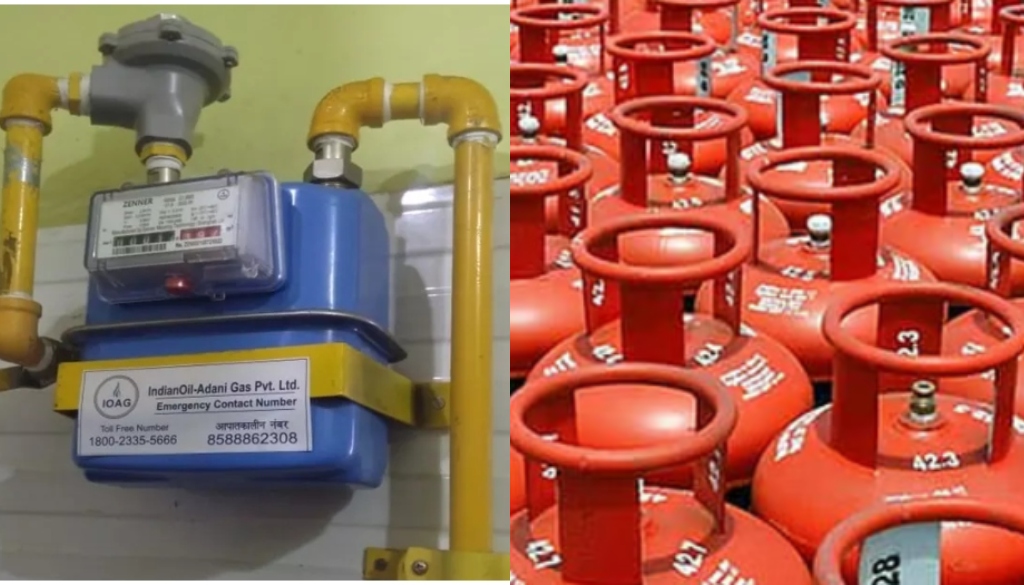
Patna: The Bihar government has initiated steps to phase out LPG cylinder usage in areas where Piped Natural Gas (PNG) infrastructure is already operational, a move aimed at increasing the use of gas pipeline networks and reducing dependence on imported liquefied petroleum gas.

The Department of Food and Consumer Protection has directed district administrations across the state to implement the transition and closely monitor compliance.
In a communication issued to all District Magistrates, the department’s secretary, Deepak Anand, instructed officials to ensure that consumers in areas served by PNG networks shift to the piped gas system within a stipulated timeframe.

Three-Month Notice For Consumers
Under the proposed arrangement, gas distribution companies will issue mandatory notices to households located in residential societies, colonies and neighbourhoods where PNG infrastructure has already been installed.
Consumers will be given a three-month period to transition from LPG cylinders to PNG connections. After the expiry of the notice period, oil marketing companies are expected to discontinue LPG supplies to the affected households.
The decision is likely to impact a large number of urban consumers in cities such as Patna, Muzaffarpur, Gaya and Bhagalpur, where PNG networks have been expanded in recent years.
Government Cites Energy Security Concerns
Officials have linked the move to broader concerns over India’s energy security and efforts to reduce reliance on imported LPG.
According to the department, disruptions and uncertainties in global energy markets, particularly amid ongoing tensions in West Asia, have highlighted the need to optimise domestic gas infrastructure.
The Centre and state governments have invested significantly in the expansion of city gas distribution networks, and authorities are now seeking to maximise utilisation of these systems.
Officials argue that shifting urban consumers to PNG will help reduce pressure on LPG supply chains while making better use of existing pipeline infrastructure.
Government Colonies To Be First Targeted
The transition is expected to begin with government establishments and residential complexes.
Instructions have been issued to phase out LPG cylinder usage in government colonies, residential quarters for officials and employees, public sector undertaking (PSU) colonies, government hospitals, police lines and circuit houses across Bihar.
Authorities say these locations will serve as the first phase of the rollout before wider implementation in urban residential areas.
Impact On Urban Households
The move marks a significant policy shift in Bihar’s domestic cooking fuel landscape.
PNG is generally supplied through underground pipelines directly to homes and is often promoted as a safer and more convenient alternative to LPG cylinders. However, the transition may require households to install new connections and adapt to a different fuel delivery system.
District administrations have been asked to coordinate with gas distribution companies and ensure that consumers are informed about the transition process.
The state government has indicated that monitoring mechanisms will be put in place to track compliance as the policy is rolled out across districts where PNG infrastructure is already available.