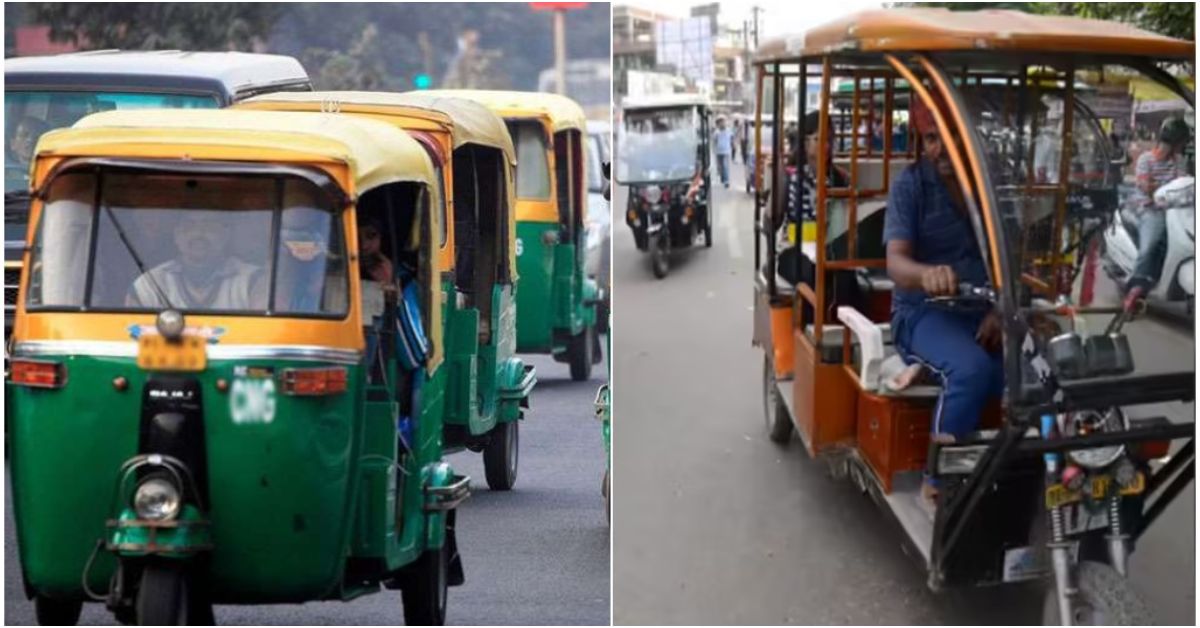
Patna: The Patna administration has initiated a major restructuring plan for regulating auto-rickshaw and e-rickshaw operations in the urban area, aiming to improve traffic flow and reduce route conflicts.

The proposal was finalised during a meeting held on Thursday at the Divisional Commissioner’s office under the chairmanship of Divisional Commissioner Mayank Warwade.
Three-Zone System Planned

Officials decided that the city will be divided into three operational zones for auto-rickshaws and e-rickshaws. Each zone will be assigned a specific colour code, and vehicle permits will be issued accordingly.
The system is designed to regulate movement based on fixed routes and carrying capacity, reducing overlapping services across high-traffic corridors.
Route Restrictions and Free Zones
The meeting also discussed the creation of designated “free zones” for autos operating under reserved and prepaid services to improve passenger convenience.
At the same time, a proposal was examined to restrict e-rickshaw movement on key arterial routes, including Bailey Road, Old Bypass, Exhibition Road, Bakarganj, Fraser Road, the Gandhi Maidan area, Anisabad–Phulwarisharif route, Atal Path and Ganga Path.
Officials said the restrictions are intended to ease congestion in high-density traffic zones.
Administrative Viewpoint
Mayank Warwade said the zoning framework has been designed to minimise route overlaps and ensure smoother traffic movement across the city.
He added that passenger convenience has been kept central to the planning process.
Digital Tracking and Database Plan
Transport Department Secretary Rajkumar suggested the creation of a comprehensive database of all autos and e-rickshaws operating in Patna.
Driver associations will be asked to submit details in a prescribed format, which will be digitised after a public information drive. The department also plans to develop integrated software to support online permit applications in the future.
Administrative Coordination
The meeting was attended by senior officials including Manoj Kumar Chaudhary and representatives from the National Informatics Centre (NIC).
Officials indicated that the new system, once implemented, is expected to bring more structure to last-mile transport operations and help reduce congestion in the state capital.